
Understanding Thread Face Lift Procedures
Every year, thousands of faces experience the subtle traction of a polydioxanone thread. This non surgical technique provides an alternative to open surgery.
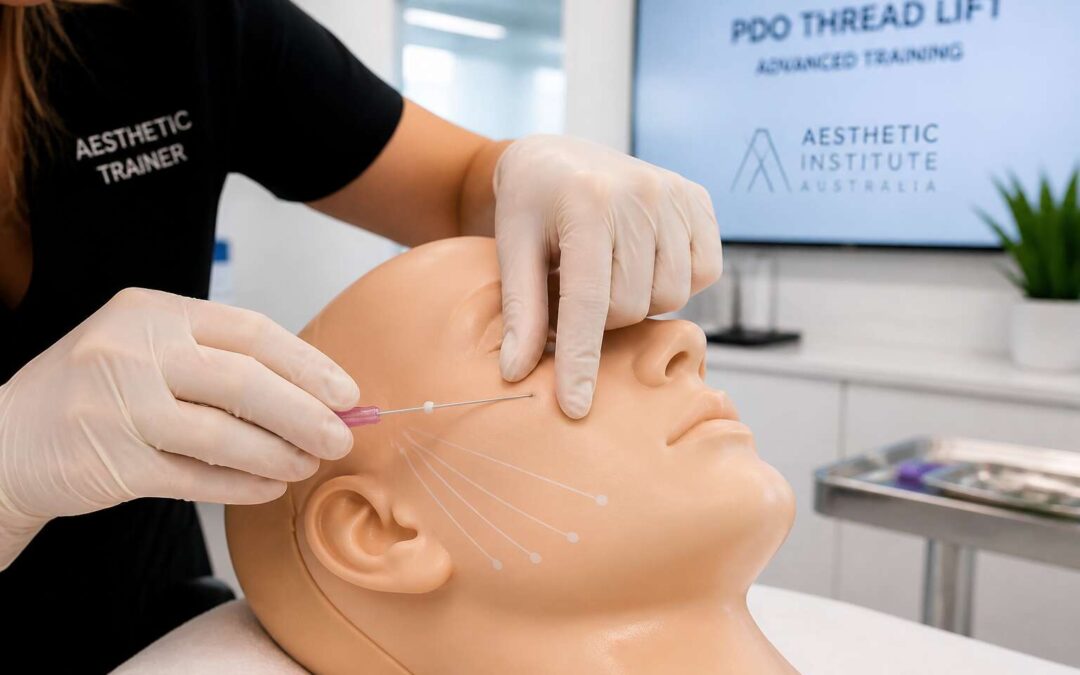
During the procedure, a clinician passes fine needles through the skin. The barbs engage the dermis and reposition the underlying tissue. In response, the body deposits collagen around the filament, leaving a lasting support structure.
- The eyebrow region
- The midface and cheek hollows
- The jawline and lower marionette lines
Each area demands a specific angle and depth of insertion. Mastery of these angles forms the core of thread face lift training courses australia. Many South African practitioners travel there to learn cadaver based methods, then adapt those protocols to local conditions.
Regulatory Framework for Aesthetic Training in Australia
In South Africa’s booming aesthetics industry, the conversation inevitably turns to global standards. Down under, the regulatory framework for aesthetic training is a labyrinth of state-based rules, not a single national law. This patchwork creates a fascinating tension for practitioners seeking international credentials. It is a rigorous system, but one that varies dramatically depending on your postcode. The Australian Health Practitioner Regulation Agency (AHPRA) oversees most medical procedures, yet non-surgical aesthetics often slips through the cracks. This ambiguity is precisely why many professionals look toward comprehensive thread face lift training courses australia to establish a baseline of safety and skill.
The specific pathway is rarely linear. You could be a nurse in Queensland with broad authority, while a cosmetic injector in Victoria faces stricter medical oversight. Consider the scope of practice variables:
1. Medical practitioners generally have the widest remit for invasive procedures.
2. Nurses often require a formal endorsement or supervised practice hours.
3. Non-medical beauticians face the strictest limitations, sometimes barred entirely.
This regulatory flux means your choice of education is paramount. A course grounded in Australian compliance, even if taken abroad or online, signals a serious commitment to safety. For the discerning South African aesthetician, aligning with this rigorous standard is not just a bonus, it is a competitive advantage. When you finally sit for that advanced placement, the depth of your training will speak louder than any local endorsement. Seek out the thread face lift training courses australia that dissect these legal nuances; your future clients will thank you for the foresight.
Selecting the Right Course Provider
Choosing where to train for thread face lift training courses australia feels a bit like selecting a surgeon for your own face. The stakes are personal. I have spent years watching practitioners pick courses based on price alone, and the results are often regrettable. A reputable provider should offer live model practice, not just theory. Look for small class sizes and tutors who actively perform the procedure.
Here is what I tell every aesthetic nurse who asks for advice:
– Verify the trainer’s clinical experience, not their marketing.
– Ask for a breakdown of complication management protocols.
– Check if the certification is recognised by your local health authority.
When I compare thread face lift training courses australia, I look for evidence of ongoing mentorship. The right course will leave you feeling competent, with real skills to show for it. It is a decision that deserves your full attention!
Course Curriculum and Practical Training Components
The curriculum for thread face lift training courses australia follows a deliberate sequence. I find the order of study strangely intimate. First, the architecture of the face. Then the instruments, the threads, the sharp geometries of each needle. Nothing is rushed. You sit with the anatomy until it feels familiar.
The practical components are where the real transformation happens. You start on synthetic skin, feeling the pull of the thread beneath your fingertips. Later, you work on live models under strict supervision. The instructors study your every move. They correct your depth, your angle, your hesitation.
- Cadaveric dissection of the superficial musculoaponeurotic system
- Thread insertion techniques on silicone models
- Assessment and management of vascular complications
By the final session, the theory and practice merge. You understand the tension, the lift, the quiet permanence of your work. These courses reshape how you see a face entirely.
Career Pathways and Professional Growth
Most aesthetic nurses hit a ceiling in their local market. Advanced skills change that. For South African practitioners, pursuing thread face lift training courses australia opens doors that simply don’t exist at home. You learn from clinics with years of high volume experience, then return with a portfolio that sets you apart. Many professionals pair these courses with continued online support, but the in person component is what truly builds confidence.
The career trajectory shifts dramatically. One practitioner I know moved from part time work to running her own Johannesburg clinic within a year of completing her thread face lift training courses australia.
- Advanced complication management protocols
- Certification recognized by international insurers
- Direct mentorship from Australian trainers
This pathway suits nurses, doctors, and dentists looking to specialise. The demand for non surgical lifts in South Africa keeps growing, and being among the first with this training positions you as a regional expert.