
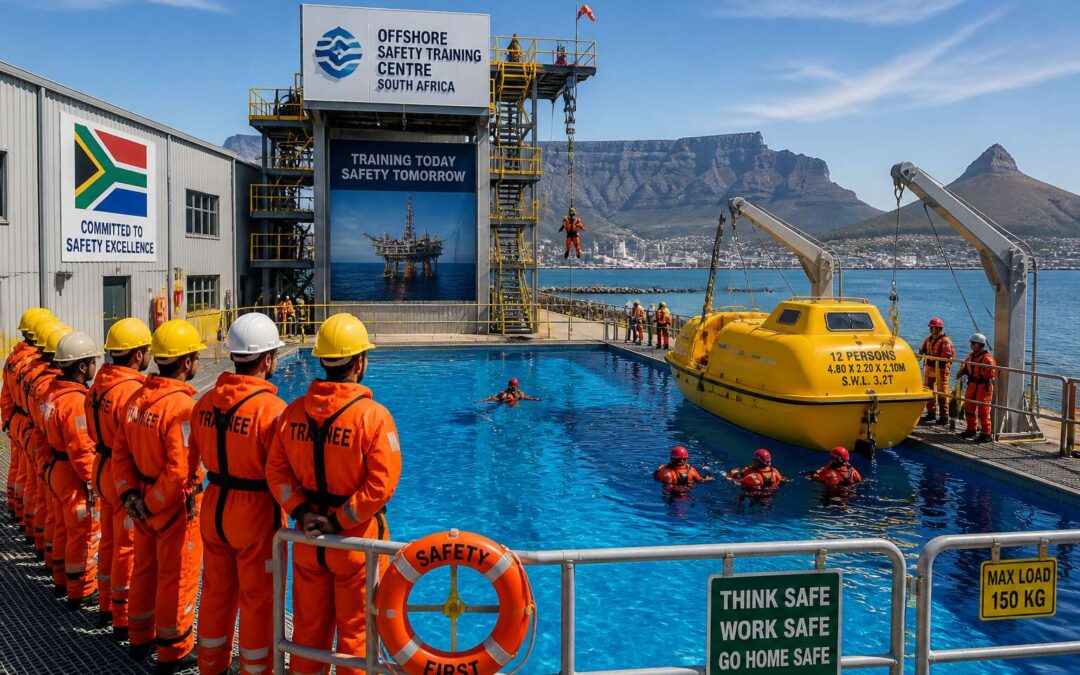
Understanding the South African Offshore Training Landscape
Key Drivers of Demand for Offshore Certification
South Africa’s coastline supports a busy shipping corridor, yet the training infrastructure behind it stays out of the public eye. The landscape is built around international conventions, local accreditors, and a handful of reputable academies. For a new candidate, the sheer range of options can be baffling.
So what is driving the surge in enrolment? The pressures are concrete:
- STCW compliance is mandatory for any international voyage
- Local offshore oil and gas projects require certified crews
- The South African Maritime Safety Authority continues to tighten inspection rules
Each driver pushes trainees to compare offshore training courses prices in south africa carefully. That comparison is where most of the confusion begins, and I find it is often the deciding point for someone choosing a career at sea!
Regulatory Bodies Governing Maritime Training Standards
The South African offshore training landscape is governed by formal regulators. At the apex sits SAMSA, which polices training standards without compromise. Without SAMSA approval, even the most impressive academy is merely teaching expensive theory. Then there is the STCW convention, the baseline for any career that crosses beyond South African waters.
- SAMSA accreditation for local competency certificates
- STCW compliance for international recognition
- IMO model courses as a supplementary guide
This layered scrutiny directly influences offshore training courses prices in south africa. Schools that submit to rigorous audits carry overheads that cheaper institutions avoid. Newcomers often mistake price for quality, but the real metric is how well a course maps to these regulations. I have seen trainees discover this the hard way, and it is a costly lesson that compels attention!
Professionals Who Typically Need Offshore Qualifications
In the maritime world, the ocean rarely forgives a lack of preparation. It is a demanding arena where machinery hums with a particular tension and weather patterns shift like moods. The professionals drawn to this sector are not casual tourists of the sea. They are the engineers, the deck officers, and the logistics coordinators who keep the global economy afloat. Consider that over 90% of world trade travels by water, and you begin to understand the weight these individuals carry on their shoulders.
The South African offshore training landscape is a unique ecosystem. It sits at the crossroads of the Atlantic and Indian Oceans, a geographic position that demands a workforce ready for unique challenges. The people who populate this space are diverse. You have the deck cadets fresh from their first voyages, their eyes still wide with the ambition of command. Then there are the seasoned rig workers who have seen storms that would make lesser souls weep, and the dynamic positioning operators who hold a vessel’s position over an abyssal depth with a delicate touch.
These roles share a common thread. They all require a certification that goes beyond mere theory. The qualifications sought here are not trophies for a shelf. They are passports to a life that most desk-bound professionals cannot comprehend. Whether you are moving from a fishing trawler to a seismic survey vessel, or transitioning from the navy to commercial salvage, the criteria are strict. The journey involves a significant investment, and that is why the offshore training courses prices in south africa often come as a surprise to the uninitiated.
Within this landscape, the types of individuals seeking entry are typically defined by specific career trajectories:
– Marine engineers seeking certification for high-voltage systems on modern vessels.
– Deck officers advancing to the rank of Chief Mate or Master with advanced firefighting credentials.
– Logistics and shore-based personnel needing sea survival skills to support offshore wind farms or oil rigs.
– Drilling crew requiring well control certification and emergency response training.
The training ground is not a classroom in the traditional sense. It is a crucible. A place where survival drills are run in the cold waters of the Atlantic, where firefighting simulations are conducted with real, roaring flames. The cost of these programs is often a reflection of the realism involved. Simulators that cost millions are used to shake the hands of trainee captains. Survival suits that are torn and punctured are the norm rather than the exception.
This ecosystem is not built for the faint of heart. It rewards the dedicated and penalizes the careless. For the individual, choosing a course is akin to choosing a vessel for a long voyage. The price tag is a significant part of the decision, but the standard of the instruction is the true currency. When professionals look at the offshore training courses prices in south africa, they are not merely looking at a number. They are assessing their own potential for survival and success in a field where human error is measured in billions of rand and, far worse, in lives.
How Local Economic and Market Conditions Shape Course Fees
Ask a port accountant in Durban about the rand and you will hear a litany of complaints. Forex swings can shift the cost of imported simulators by thousands of rands overnight, and fuel-price spikes add their own sting. These forces, plus the premium paid to lure instructors to the southern tip of Africa, explain why the numbers bewilder outsiders.
Market conditions mean you are paying for geographic necessity. Providers import equipment not built locally and maintain it to global standards while interest rates and customs duties persist. The fee structure reflects that reality:
- Simulator time is priced against hardware import and upgrade costs.
- Instructor salaries must compete with international crewing offers.
- Foreign certification fees arrive with a rand markup.
This is why offshore training courses prices in south africa do not follow the logic of a city-centre classroom. They emerge from a negotiation between local economic pressure and international expectation, and the final number is rarely arbitrary.
Core Factors That Determine Training Expenses
Certification Level and Specialization Complexity
A basic safety induction and a full unlimited chief engineer licence differ by more than R100,000. That gap explains most of what people misunderstand about offshore training courses prices in south africa. Entry level certificates are cheap because they use standard classrooms and generic instructors. The upper tier demands simulator hours, examination fees, and evidence of sea service, all of which carry real costs.
Specialisation raises costs further. Dynamic Positioning operator courses, for example, require rare instructors and expensive simulator rigs. If a provider trains only two candidates, those fixed costs land on those two students.
- Simulator access and maintenance
- Instructor scarcity and certification
- Accreditation fees per candidate
This is why a niche certificate never falls to the price of a basic course. When you compare offshore training courses prices in south africa, ask what the fee actually covers; the cheapest quote often excludes the very components that make the qualification credible.
Accreditation and Reputation of the Training Provider
Nobody pays a premium for a pretty certificate, yet accreditation still drives the bill upwards. Every reputable provider in South Africa submits to external audits, pays for simulation software licences, and verifies instructor qualifications each cycle. These recurring costs explain offshore training courses prices in south africa without mystery.
Reputation complicates comparison shopping. A well-known school can charge R8,000 for a course that an unknown training centre offers for R4,000. The difference is assurance. Your employer recognises the first certificate immediately, the second draws questions.
- Annual accreditation renewal fees
- Third party examination costs
- Tracking of trainer credibility and sea service
When the cheap quote arrives, ask who signed the licence. That name carries your future at sea.
Additional Costs for Assessment and Final Examinations
Simulator time is the most expensive line on any invoice, and that is where the money goes. Core factors that determine training expenses include replacement parts for hydraulic systems, licences for simulation software, and the risk insurance a provider carries in case a student damages equipment. Offshore training courses prices in south africa climb when a school maintains modern simulators instead of outdated ones.
Additional costs for assessment and final examinations arrive after the coursework ends. You are charged for certified assessors, for renting the examination bay, and for the administrative work of issuing the final certificate.
- Simulator hours reserved for final scenarios
- External examiner travel and day rates
- Certification printing and shipping
These fees are rarely negotiable. In my experience, they add up to a fifth of the total course fee, which explains why the cheap quote disappears once you ask for the full breakdown.
Classroom-Based vs. Online vs. Blended Learning Formats
The mode of delivery reshapes every line item in your quote. Classroom based training carries fixed costs: venue hire, physical simulators, and on site instructors who must be paid whether five or fifty students attend. Online learning removes those bricks and mortar expenses, but introduces hidden fees for platform licences, bandwidth, and remote proctoring. Blended learning occupies the middle ground, and it is where offshore training courses prices in south africa become most transparent.
- Instructor travel and accommodation for face to face sessions
- Development of digital courseware with interactive modules
- Technical support for learners accessing systems remotely
These factors shift with each format, so the cheapest headline price often hides the true cost of delivery.
Customised or Competency-Based Training Packages
The real price emerges when you ask for something that fits your exact operation. One company may need a survival course aligned with its specific vessel layout, while another requires an assessment of existing competencies rather than a full retraining cycle. These bespoke requests alter the pricing structure because they demand extra design time, scenario scripting, and validation against internal procedures.
I have watched competency-based routes multiply invoices faster than any standard enrolment. A provider must map your team’s skills against OPITO or SAMSA standards, then build evidence packs for each candidate. The more granular the audit, the higher the offshore training courses prices in south africa become. Expect line items for:
- Pre-course skills audits and gap analysis
- Modified practical simulations for your equipment
- Customised assessment rubrics
Every deviation from a standard package adds hours of instructor work. That is the price of precision.
Typical Cost Ranges for Common Offshore Qualifications
Entry-Level Safety and Basic Induction Course Pricing
For most newcomers, the first financial hurdle is the basic safety induction course. In South Africa, a standard five day entry level package, covering survival techniques, fire fighting, and elementary first aid, generally lands between R4,500 and R7,500. Add helicopter escape training, and you step into the higher bracket.
Typical entry level price ranges:
– Basic Safety Induction: R3,500 to R6,000
– HUET with sea survival: R7,000 to R11,000
– Full BOSIET equivalent: R12,500 to R18,000
These figures shift depending on the training provider’s location and equipment. Coastal facilities in Durban or Cape Town often price differently than inland centres. Overall, offshore training courses prices in south africa for these foundational certificates remain substantially lower than equivalent courses in Europe, yet they still represent a serious initial investment for an individual entering the industry.
Advanced Technical and Specialist Certification Fees
Once you move past basic induction, the financial gearing changes. Specialist certifications for deepwater operations or dynamic positioning command fees that far exceed entry level costs. For instance, IWCF well control courses run between R25,000 and R40,000, while a basic DP certificate lands in the R30,000 to R50,000 range. These figures reflect simulator time and assessor qualifications.
Some additional advanced offerings, and I have seen the invoices, break down as follows:
- H2S and breathing apparatus: R7,500 to R12,000 per day
- Offshore crane operator (Stage 1): R22,000 to R35,000
- Marine emergency response (MERT): R18,000 to R28,000
Overall, offshore training courses prices in south africa for these advanced tickets still undercut international rates, but they demand serious budgeting and employer sponsorship.
Travel, Accommodation, and Study Material Expenses
For most workers, the real cost of offshore training courses prices in south africa becomes clear only after factoring in the extras. A standard STCW basic safety combination, for example, typically runs between R8,000 and R15,000. That covers the core tickets, but not the logistics.
Travel to a coastal provider, accommodation for the course duration, and printed study materials can add another R3,000 to R7,000. Some schools bundle these into a package, while others itemise them separately.
- Flights or fuel to Durban or Cape Town: R1,500 to R4,000
- Bed and breakfast near the campus: R450 to R900 per night
- Workbooks and assessment handouts: R800 to R2,500
Those figures shift if you train inland or choose a provider with online theory modules. Either way, the full expense is what matters when comparing offshore training courses prices in south africa.
Evaluating the True Value of Different Training Providers
How to Identify Transparent and Detailed Price Quotes
Comparing offshore training courses prices in south africa demands careful attention. A quote that looks modest on the surface may hide mandatory extras for simulators, logbooks, or certification issuance. I have seen learners pay nearly a third more than anticipated because they did not examine the full quotation!
To evaluate a provider’s true value, request a complete breakdown before enrolling. Transparent offshore training courses prices in south africa clearly distinguish tuition from assessment, equipment usage, and administrative charges. Reputable schools welcome this scrutiny. Others become evasive.
Consider these warning signs when reviewing quotes:
– Vague line items such as ‘miscellaneous fees’
– Prices quoted without VAT or in foreign currency
– A refusal to provide a written cost structure
The clearest indicator of honesty is a provider who volunteers what is not included. That candour deserves your trust, and it is worth more than any discount.
Payment Plans, Installments, and Flexible Financing
Flexibility in payment is often the difference between starting your course next month or next year. Offshore training courses prices in South Africa are frequently quoted as a single sum, but candidates who ask about installment structures immediately position themselves ahead. Some maritime academies allow you to split tuition into monthly tranches, while others demand the full amount before you enter a simulator. When evaluating offers, inspect these details:
- Deposit percentage and whether it is refundable
- Administration charges for processing installments
- Whether practical assessment fees are deferred or due upfront
Financing through a study loan or employer sponsorship can ease the strain, but always calculate the total cost over the repayment period. A provider who offers transparent, interest-free terms demonstrates confidence in their own training. Offshore training courses prices in South Africa may look similar on paper, but the payment plan reveals the true expense. Always read the fine print on late payment penalties and rescheduling fees before signing.
Calculating the Return on Investment for Career Advancement
Comparing academies on face value is a trap. Offshore training courses prices in South Africa fluctuate by less than ten percent, but the real expense appears afterward. I have seen candidates choose a cheap provider only to fail the simulator assessment because they practiced on outdated equipment. The true value lies in how a course prepares you to work.
Calculate your return on investment by estimating the salary hike after certification and the probability of passing first time. A course that costs R1,000 more but cuts your study period by two months is a better deal. Inspect these signals before you pay:
- Recent job placement records for graduates
- Availability of instructors during practical sessions
- Alignment of training modules with current industry protocols
These details define the worth of your money.
Re-Certification and Upgrading Costs Over Time
The true cost of an offshore certificate reveals itself in the renewal cycle. Most South African qualifications expire within five years, and the price tag for refresher courses often rivals the initial fee. I have watched veterans budget for the first course, only to stumble when medicals and competency renewals stack up at once.
Compare providers by their long-term value. Ask about upgrade paths for new equipment, simulator time on current models, and whether instructors offer catch-up sessions after failures. Re-certification expenses can be predictable:
- Annual competency assessments
- Renewal of safety certificates
- Upgrades for new industry regulations
Offshore training courses prices in South Africa look similar at a glance, but the provider that bundles refresher modules into a single price is the one that saves you money over a decade.
Practical Smart Budgeting Strategies for Prospective Students
Securing Employer Sponsorship or Internal Study Support
Many professionals overlook the funds quietly reserved for crew development. I once watched a deck officer secure full reimbursement for an advanced certificate simply by linking it to a pending vessel upgrade. That is the core of smart budgeting. Position your request as an operational need, not a personal ambition. Try these practical moves:
- Review your company’s training matrix for gaps your qualification could fill.
- Prepare a written proposal that maps the course content to specific job functions.
- Offer to sign a service agreement in exchange for partial or full payment.
Employers respond better to concrete numbers. When you research offshore training courses prices in south africa, bring a detailed quote from an accredited provider. That shows seriousness, and it opens doors! Internal study support can also come in less obvious forms, such as paid study leave, mentorship, or access to simulation labs. Combine these with a modest personal contribution to reduce resistance.
Optimal Timing for Enrollment to Access Lower Fees
A three week delay once saved me R5,200 on a marine certificate. Timing directly affects offshore training courses prices in south africa. Providers lower fees when enrolment dips. That usually happens from May to July and again in early December. Shifting your course by a few weeks can reduce costs by 10 percent or more. Understanding offshore training courses prices in south africa requires attention to these seasonal patterns.
Monitor training centre announcements for capacity based discounts. Unused slots, often two weeks before a class starts, get offered at reduced rates.
- Schedule theory segments for winter.
- Book practical assessments before annual maintenance breaks.
Flexible leave lets you accept these windows. Your employer prefers a date that avoids peak operations. That reduces resistance. One deck officer moved his October course to November and saved R4,700. Planning changes the arithmetic.
Group Rates and Bundled Multi-Course Certification Savings
Group rates quietly shift the arithmetic. Several maritime academies along the coast offer 12 to 15 percent off when five or more students enroll together. A trawl company in Cape Town once saved R9,400 by sending four deckhands through their STCW packages as one bloc. That is the kind of adjustment that makes offshore training courses prices in south africa more manageable for small operators.
Bundled multi-course certification savings come from negotiating a combined figure. Some providers offer a single quote covering theory, simulators, and the final examination, and they discount the assessment portion when you commit to two or more modules in one booking.
Common structures include:
- A study group of colleagues targeting the same certificates
- An entry-level safety course paired with an advanced specialist module
- A full package price rather than per-course billing