
Understanding the Basics of Sage 50 Education
What Is Sage 50 and Who Needs It?
Sage 50 remains a standard application in South African finance departments. It handles invoicing, stock, and payroll for businesses that have outgrown spreadsheets. Anyone managing cash flow, from a boutique retailer to a construction firm, likely needs this software.
Education on Sage 50 begins with its core modules: debtors, creditors, and reporting. The typical user is a bookkeeper or financial manager who requires structure without a full ERP system. Here is who benefits most:
- Small business owners handling their own accounts
- Accountants serving multiple clients
- Office managers tracking expenses and suppliers
For those new to this field, sage 50 training courses free provide a practical route to mastering the essentials.
Core Features Covered in Entry-Level Training
Most learners overestimate Sage 50’s complexity. Entry-level training focuses on the fundamental workflow of processing transactions and reconciling accounts. I have watched newcomers grasp these concepts within a single session!
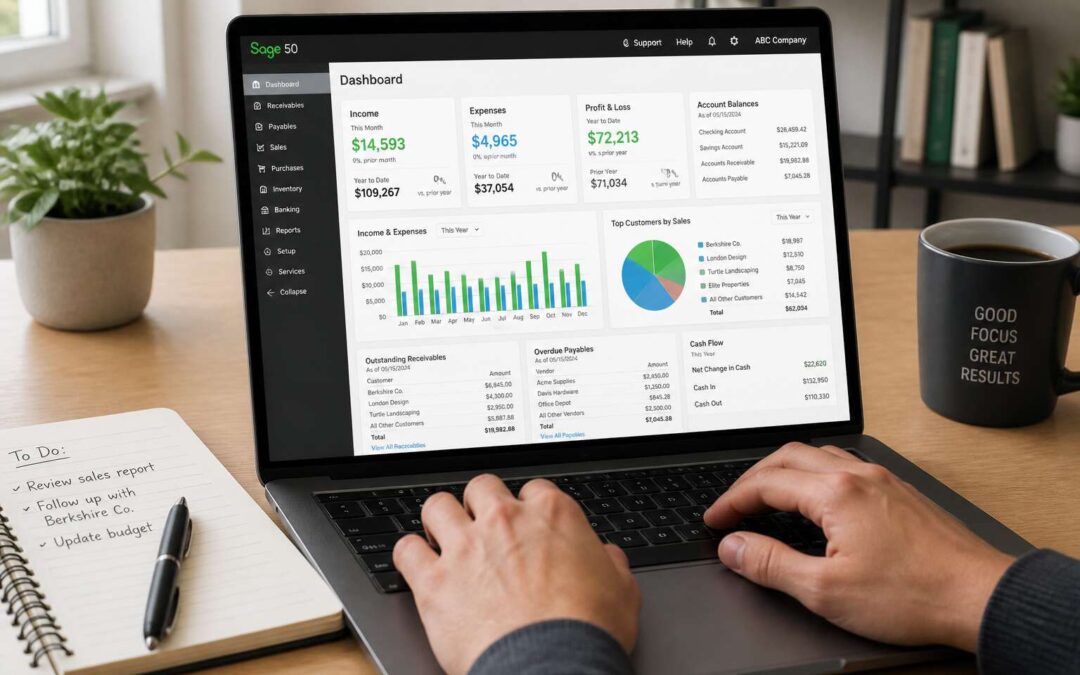
Students begin with the dashboard, then move into customer interactions and supplier records. Common exercises cover these core features:
- Invoicing and credit notes
- Bank reconciliation
- Debtors age analysis
Practising these tasks builds practical confidence without overwhelming jargon. For professionals seeking sage 50 training courses free, this hands-on approach transfers directly to daily duties, preserving ledger integrity.
Why Free Learning Materials Differ From Paid Courses
Nearly 80% of learners abandon free online courses within the first week. The reason is often the gap between the promise of free education and the realities of practical application. When you search for sage 50 training courses free, you are likely looking for a shortcut. However, the structure of these materials often dictates how quickly you actually learn.
Free learning materials typically focus on surface-level navigation, showing you where buttons are located. Paid courses, on the other hand, tend to prioritise workflow logic and error correction. In the free landscape, you often get static PDFs or videos that assume you are a blank slate. Paid options usually simulate real business environments with messy data, which forces you to think critically.
The distinction becomes clear when you look at the depth of the content:
– Free resources often ignore troubleshooting common data capture errors.
– Paid modules include practice files that mimic a live South African company ledger.
– Free materials rarely update for the latest SARS tax tables or VAT submission changes.
– Structured courses offer a sequence that prevents you from learning advanced functions before mastering the basics.
Another significant divergence lies in the support systems. With sage 50 training courses free, you are generally on your own when a transaction does not balance. A paid curriculum usually includes access to mentors or forums where you can ask why a specific reconciliation is off by R3.50. That small correction is where true competence is built, not in watching a video but in fixing the issue yourself. For a South African professional, this matters because local payroll and VAT rules require a level of precision that generic free tutorials simply do not provide.
Common Myths About Learning Sage 50 Without a Budget
The myth that free means shallow still lingers in many South African accounting circles. Yet the basics of Sage 50 education thrive on accessible repetition, not expensive platforms. Debits and credits must learn to speak to one another within your ledger, and free materials can teach that conversation clearly.
Another stubborn notion is that a R0 budget leaves you blind to local payroll nuance. Some of the strongest learners I have watched begin with sage 50 training courses free, then test each lesson against their own company files. The work is deliberate practice, not payment.
- Free modules often explain fundamental navigation without unnecessary clutter.
- Paid mentorship shortens the journey but never replaces personal repetition.
Time becomes another myth. People assume free study drags on. In practice, focused self-study with freely available videos builds competence within weeks.
Unlocking the Value of No-Cost Learning Opportunities
How Free Resources Build Practical Confidence
I have yet to meet an accountant who learned Sage 50 from a single video. Assurance grows when you test actions and see immediate outcomes. In South Africa, working professionals often discover that free resources offer exactly this space. These materials let you repeat processes, correct mistakes, and learn at your own tempo. This kind of exploration stays with you longer than any lecture.
Free opportunities give you:
- Repeated practice without financial pressure
- Instant feedback from software responses
- The freedom to revisit difficult steps
Each attempt removes a layer of uncertainty. After a few focused sessions, you begin to move through transactions with measured ease. That resulting confidence is practical, not theoretical. Sage 50 training courses free deliver the starting point; your own effort carries the rest.
Bridging the Gap Between Accounting Fundamentals and Software Skills
Accounting theory explains what a journal entry is. It does not explain which drop-down menu to click when the supplier payment vanishes at 3pm on a Friday. Sage 50 training courses free exist to close that distance between your bookkeeping knowledge and the software’s actual behavior. Your degree prepares you for concepts. The application is a different discipline entirely.
Consider what no-cost learning pathways provide:
- A direct route from conceptual understanding to screen-level decisions
- The opportunity to watch how Sage 50 handles VAT, creditors, and inventory in real time
- A safe environment for testing scenarios your textbooks only describe in theory
This connection never happens accidentally. It develops through deliberate exploration. The software does not review your accounting diploma before responding to a click. Free materials demonstrate how the two connect, and that clarity carries directly into your daily workflow.
Professional Growth and Career Advancement Without Upfront Costs
Professional growth does not have to wait for a training budget. In South Africa, sage 50 training courses free of charge let you keep moving forward even when funds are tight. You can build a marketable skill without spending a cent!
Employers notice initiative. They see a candidate who learned the platform on their own, who can perform the daily tasks the role demands. That readiness matters in a job market where practical skill often outweighs formal credentials.
The value of no-cost learning is best measured in what it unlocks:
- Interview conversations that start from a position of knowledge
- The ability to step into a new role without a ramp-up period
- A professional profile that grows even when budgets do not
Career advancement does not always require a formal qualification. Sometimes it requires the initiative to teach yourself what the market needs at a pace your budget can accommodate.
Understanding Certification Limitations of Free Training
In South African job interviews, ability often carries more weight than attendance. No-cost learning gives you direct access to the program’s internal logic, its error handling, and its reporting mechanics, without touching your budget. That is the core benefit: you can experiment with a dummy company, break a reconciliation, and fix it, all in a sandbox.
However, understand the limitation. Most sage 50 training courses free of charge do not issue an accredited certificate. They deliver competence, not credentials. That gap matters when a formal job spec demands a printed proof. Yet many employers, especially in smaller firms, will hand you a test ledger and ask you to process a batch. Your demonstrated fluency will answer that question faster than any paper slip.
When Free Training Is Enough and When It Is Not
Think about the moment a hiring manager hands you a trial task, not a certificate check. That is the real test of your Sage 50 fluency. Most free resources stop at broad overviews, but sage 50 training courses free can offer surprising depth if you know where to look. The distinction is practical: employees who need to reconcile a petty cash account or correct a misposted journal benefit far more from hands-on practice than from a static PDF. In the South African context, a junior bookkeeper may need to be productive on day one. Free training delivers this by allowing you to work through scenarios repeatedly. You get a feel for the software’s logic, noticing how it flags discrepancies or handles VAT calculations out of the box. The catch is that this style of learning demands self-discipline and a willingness to troubleshoot without a help desk.
The decision comes down to your career stage and your target employer. Moments where no-cost learning suffices are numerous:
1. You are moving from a pure accounting background and need to translate that knowledge into a software context.
2. You are interviewing for roles where a practical Excel or ledger exercise is part of the process.
3. You are upgrading your existing skills while employed, and your current role does not require formal proof.
However, when you hit the payroll module or need to manage complex multi-company consolidations, you might find the free material hits a plateau. No structured mentorship means you may internalize shortcuts that work in your sandbox but not in a live environment. Accredited training often provides exposure to standardized procedures, which matters if you are aiming for a position at a large firm with rigid audit compliance. There, the absence of a formal record could stall your application, even if your practical speed is excellent. The honest answer is that the value of sage 50 training courses free is determined by the weight you place on demonstrated ability versus recognized accreditation. If your network can vouch for your practical skill, free learning is a potent tool. If you are a fresh candidate with no references, you may need a hybrid approach, using free content for practice and saving for formal assessment later. The key is to know what your local market prizes, then build your capacity around that demand.
Exploring the Range of Complimentary Course Formats
Self-Paced Video Tutorials and Watch-at-Your-Own Pace Modules
Free learning isn’t a single method. It comes in distinct shapes. Self-paced video tutorials let you pause and rewind complex reconciliations. Watch-at-your-own-pace modules suit busy South African bookkeepers who study after hours. In my view, this freedom matters when you juggle work and family.
- Short video lessons focused on one task, like capturing invoices.
- Downloadable workbooks paired with screen recordings.
These formats differ from live webinars. They give you repeated access. You can revisit a module before attempting the real thing. For anyone searching sage 50 training courses free, this on-demand approach turns downtime into productive study. No schedules. No pressure. Just steady progress at your own pace.
Live Webinars With Interactive Q&A Sessions
Live webinars bring a different kind of energy. You register for a set time, and the instructor demonstrates Sage 50 features while you follow along. The interactive Q&A session is the main event. You can ask about South African VAT configurations, payroll nuances, or the specific reporting quirks of your industry.
In my experience, the minutes before a session starts hold a quiet tension. You never know which participant will raise an obscure query that reshapes your understanding of the software.
Some webinar hosts also offer:
1. A recording after the live session
2. Downloadable practice files
3. Direct access to the presenter’s slide deck
These sessions complement, rather than replace, self-paced study. When you search for sage 50 training courses free, webinars often surface as scheduled events. They demand your presence, but the payoff is a real-time answer to a real problem.
Downloadable Workbooks and Practice Spreadsheets
Downloadable workbooks offer a tactile dimension that video cannot replicate. You physically type figures into preformatted cells. You reconcile mismatched trial balances. When you seek sage 50 training courses free, these materials often arrive as raw data files with no instructions. Just columns of invoices, payments, and aged receivables waiting for transformation.
The silence of working through these materials alone forces honesty. The software either accepts your entries or rejects them. That feedback loop is immediate and unforgiving. Experienced users know sage 50 training courses free with workbook components deliver deeper retention than passive viewing.
A typical workbook package includes:
1. A chart of accounts mapping exercise
2. A VAT return simulation with realistic SARS calculations
3. A bank reconciliation puzzle with deliberate errors
4. A stock adjustment scenario using different valuation methods
Each section builds on the previous one, so skipping ahead creates visible discrepancies. The spreadsheet forces sequence. You cannot fake understanding.
Instructor-Led Sample Lessons From Paid Programs
A recorded instructor’s opening minutes carry raw truth. From the first pause or confident command, you sense whether the full program will hold you. A sample lesson from a paid curriculum demonstrates more than a single invoice run. It reveals the instructor’s approach to error checking, ledger flow, and the software’s quiet quirks. This is the truest glimpse of sage 50 training courses free.
Some paid providers release a complete lesson from their intermediate module. The file assumes prior knowledge and moves faster than a tutorial snippet.
Inspect the instructor’s tone when a journal refuses to balance. Notice their willingness to show alternative reconciliation paths. Watch how they handle a VAT discrepancy without a script. These details separate passing curiosity from genuine instruction.
Community Forums and Peer-Supported Learning Guides
Community forums operate where formal courses end. Someone posts a screen shot of a stubborn reconciliation error, and within hours a practitioner from another province offers a workaround. These exchanges form a collection of practical knowledge, far removed from polished marketing materials.
Peer-supported guides take that same energy and structure it. They are not produced by vendors, but by people who spent unpaid weekends mastering the software. For anyone searching sage 50 training courses free, these guides reveal the errors that official manuals ignore. A short list shows what to expect:
- step by step fixes for recurring bank reconciliation problems
- advice on setting up VAT codes for South African tax rules
- workarounds for version specific quirks in older releases
Reading through these threads, I notice a strange comfort. The collective memory of users provides a reference point. It gives you the confidence to attempt a new process, knowing someone else has already solved the same problem.
Freemium LMS Platforms With Beginner Tracks
Freemium learning management systems present a structured alternative to paid portals. Platforms like Alison and OpenLearn offer beginner tracks that replicate the early modules of accounting software training. You enroll at no cost, work through the first chapters, and judge whether the format matches your learning style.
The variety runs deeper than expected. Some systems demand registration. Others allow you to view the full curriculum before enrolling. A few include assessment tools aligned to South African accounting standards.
- Interactive quizzes with immediate feedback
- Progress tracking dashboards
- Printable completion records
These free tracks do not replace complete certification. They provide a genuine starting point for anyone searching sage 50 training courses free, without a payment deadline.
Where to Discover High-Quality Free Sage 50 Resources
Official Vendor Channels and Free Trials
Knowing where to look matters as much as knowing what to learn. A quick search for sage 50 training courses free often pulls up third-party aggregators that recycle outdated material. The vendor’s own site, however, keeps a dedicated resource section that updates with current tax laws and reporting standards. These official pages hold tried-and-tested documentation, and they remain the quiet corner of the internet most self-taught users overlook.
The most underutilised option is the official free trial. Sage provides a full-featured trial period that lets you touch the actual software, not just watch someone else click through it. This hands-on window is an essential part of any plan to find sage 50 training courses free that actually stick. Within that trial, you get access to:
– Full system navigation and menu-setup practice
– Sample company data for safe experimentation
– The ability to create and reverse entries without consequence
This is the one place where the line between studying and doing disappears. Combining the vendor’s official guides with a live, unrestricted trial gives you a solid foundation without spending a cent. It sidesteps the guesswork of watching dated videos and puts the current version of the tool directly in front of you.
YouTube Tutorials From Certified Trainers
YouTube is a crowded space, but in my experience, certified trainers provide the most dependable starting point. Searching for sage 50 training courses free often surfaces random uploads, so verify the trainer’s credentials first. Look for instructors with Sage certification and South African tax knowledge.
- Version-specific lessons for Sage 50 Pastel
- SARS payroll and VAT tutorials
- Practice files to download
These resources move you from passive viewing to hands-on practice. When a trainer updates content for new tax years, you know they remain active. Old videos can mislead, so check upload dates and comments. Active trainers respond to questions, which adds a layer of accountability absent from static courses.
Accounting Blogs With Step-by-Step Walkthroughs
Accounting blogs occupy a quieter corner of the internet. They do not shout for attention. Instead, they offer meticulous walkthroughs that read like field notes from a seasoned bookkeeper. For those seeking sage 50 training courses free, these written guides often prove more practical than video, because you can pause, re-read, and replicate each click at your own pace. The best South African blogs dissect the software with a scalpel, showing you exactly where to adjust VAT output tax or how to reconcile a creditor’s ledger without the theatrics of a YouTube host.
These walkthroughs are frequently authored by practitioners who have wrestled with SARS filings and year-end adjustments. They write for the weary, not the curious. Their step-by-step instructions cover the mundane yet critical tasks that free courses overlook, such as correcting a posted invoice or navigating the payroll tax year rollover. A good blog post will include:
– Screenshots annotated with red arrows for clarity
– Downloadable sample data files to mirror the exercise
– Troubleshooting sections for common error codes
– Comment threads where the author answers follow-up queries
The value here is the attention to detail. A video can blur past a dropdown menu, but a blog lingers on it. For those hunting for sage 50 training courses free, these pages act as a supplement, filling the gaps left by structured modules. They also age well, since a well-written guide from a previous tax year can still teach the software’s mechanics, even if rates have shifted.
University Extension and Nonprofit Tech Libraries
University extension programs and nonprofit technology libraries quietly hold some of the more durable materials for learning bookkeeping software. Their course catalogs include archived modules that no longer carry certification but still teach the essential mechanics. These institutions rarely advertise, so the hunt requires persistence.
Nonprofit tech libraries serving small business development in South Africa often keep donated licenses and companion workbooks.
- Legacy versions of Sage 50 for hands-on practice
- Printed manuals with annotated screenshots
- Supervised computer labs with installed software
For those seeking sage 50 training courses free, these resources provide structure without cost. The materials may be dated, yet the core workflow remains unchanged. VAT rates shift, but the process endures.
Social Media Groups and LinkedIn Learning Communities
Most bookkeeping conversations on social media are noise. But tucked inside South African small business groups and LinkedIn communities, accountants share actual workarounds. Someone posts a Sage 50 reconciliation error at 9pm. By morning, three practitioners have replied with screenshots and step-by-step fixes. That peer knowledge matters more than polished courseware.
Look for groups that archive their discussions. Searchable threads become a free reference library. A few communities even host files with sample company data and old training decks. Those assets function as sage 50 training courses free, minus the enrolment form.
The real value is specificity. A LinkedIn group focused on South African VAT returns will teach you more than a generic software forum. Join, lurk, then ask one sharp question. You will find the answer faster than any tutorial’s search bar.
Strategies to Maximize Your Experience With No-Cost Training
Setting Clear Learning Goals Before Starting a Course
Before you open the first module, define what mastery means for your role. This is the shadow work of self study. I have seen learners complete sage 50 training courses free with impressive speed, yet retain little. Set goals that are specific to your daily tasks. Do you need to reconcile bank statements? Generate VAT reports? Each objective changes your focus.
Without clear targets, you wander. With them, each tutorial becomes a deliberate practice session. A quiet discipline governs those who truly benefit from free resources. Carve out a fixed time each day, even twenty minutes. Revisit difficult sections after a night’s rest. This approach transforms scattered videos into a coherent map. You are not merely consuming content. You are building a skill through intentional repetition!
Combining Multiple Free Formats for a Structured Path
Free learning materials often come as isolated fragments. A video here, a forum thread there. The savvy learner builds a scaffold from these disparate pieces. Pairing a recorded walkthrough with a downloadable workbook allows for immediate application. You watch the process, then replicate it on your own screen. This active engagement cements the steps far better than passive viewing.
Consider layering resources to mirror a structured curriculum. A live Q&A session can clarify a point you missed in a self-paced module. A blog walkthrough might offer a different perspective on a complex reconciliation. The goal is to create redundancy in your understanding.
One effective approach is to sequence your engagement:
1. Watch a short video tutorial on a specific function, such as processing a batch of invoices.
2. Immediately open your practice company and attempt the same task using a downloaded sample dataset.
3. If you encounter a hurdle, search the community forums for a solution before moving on.
This cyclical rhythm of learning and doing transforms a passive search for sage 50 training courses free into an active apprenticeship. You are not just collecting information; you are constructing a personal manual for your specific daily workflow, experience by experience.
Practicing With Sample Data and Simulated Transactions
When you practice with sample data, you are not merely fiddling with numbers. You are rehearsing judgement. The beauty of a simulated environment is that mistakes carry no consequences. You can post a rogue journal entry, reverse it, and try again without alarming a single creditor. This is where sage 50 training courses free actually transform into wisdom.
Consider building a routine around deliberate practice:
1. Create a dummy company with a month of realistic transactions.
2. Process a bank reconciliation with deliberate errors, then trace each discrepancy.
3. Run a VAT report and compare it against a manual calculation.
Prospective learners often worry that sage 50 training courses free lack interactive depth. Simulated transactions dispel that fear. Repetition builds familiarity with the software’s sequence of screens and shortcuts. When a real deadline arrives, you will move with confidence. The error becomes a teacher, and the practice company becomes a laboratory for correction.
Tracking Progress and Building a Portfolio of Exercises
Tracking progress turns scattered effort into measurable gains. When you engage with sage 50 training courses free, the value depends on what you do afterward. I recommend keeping a simple log of tasks mastered, errors made, and corrections learned. This log becomes the central record of your practice portfolio.
A portfolio of exercises is your proof of hands-on ability. Revisit your dummy company and create variations of the reconciliations and VAT reports that once tested you. Group these exercises into themed challenges.
- Duplicate a transaction and trace the audit trail
- Rebuild a month-end close from scratch
- Compare your results against a peer’s simulated data
These artifacts demonstrate your persistence. Employers want proof of grit and problem solving. A library of completed exercises shows both. The finest sage 50 training courses free only become lasting assets when you document the journey.
Leveraging Free Resources to Prepare for Paid Certification
Self guided learning is a lonely road, but the destination is certification. When you work through sage 50 training courses free, you are not just absorbing interface details. You are building a mental model of the software’s logic. To convert that model into a formal credential, you must shift from passive consumption to active interrogation. Ask yourself why a specific transaction flow exists, not just how to click through it.
The gap between free material and a paid exam is often a matter of discipline. You can bridge it by treating each free module as a building block for the official syllabus. For instance, when a free tutorial covers VAT processing, immediately recreate that process in your own sample data and then break it to see what error messages appear. Troubleshooting is the hidden curriculum.
A structured approach to self study will serve you better than random browsing.
– Replicate the exact scenarios from your free course within a 30 day trial of the software.
– Use the free course’s learning objectives as a checklist for the paid exam topics.
– Set a weekly schedule that allocates specific days to specific modules.
This method forces you to encounter the software’s limitations before the exam does. The paid certification will test your speed and accuracy, and the only way to build those is through repetition. Your free resources provide the raw material; your routine provides the refinement. When the exam day arrives, you will find that the questions feel familiar because you have already walked those paths in the dark.