
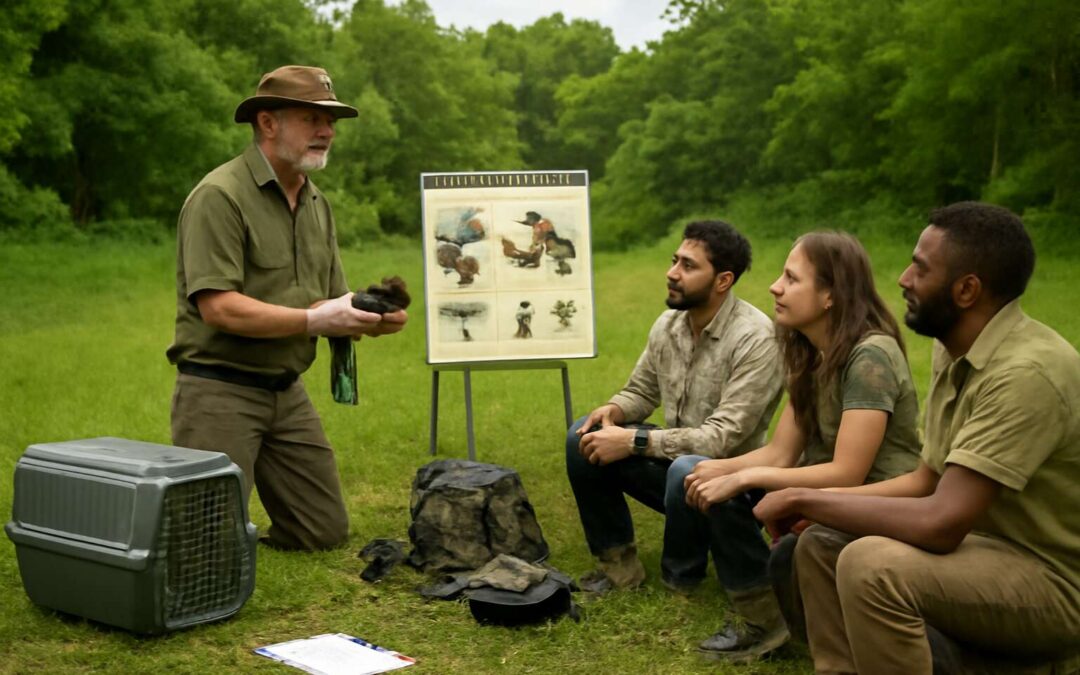
Foundations of Wildlife Education and Training
What wildlife education programs cover
Out on South Africa’s savannas, preparation is prime camouflage. Foundations of Wildlife Education and Training lay the groundwork that turns curiosity into competence, the secret sauce behind wildlife training courses.
- Ethics and animal welfare, plus legal compliance
- Field safety, risk management, and first aid
- Observation techniques, data recording, and reporting
In South Africa, the blend of theory, hands-on practicum, and real-world wildlife exposure ensures graduates don’t just read the manual — they translate knowledge into responsible action across parks, reserves, and conservation projects.
Who should enroll in wildlife education courses
Foundations of Wildlife Education and Training turn curiosity into competence, a bright hinge between wonder and real-world responsibility in South Africa’s wild spaces. A veteran learner calls it “the bridge between curiosity and responsibility,” and that sentiment lingers as you step into the practicum magic of wildlife training courses.
Who should enroll in wildlife education courses? People with a pulse on conservation—those who want to translate observation into action, not merely file notes away.
- Aspiring field researchers seeking practical skills for data collection and habitat understanding
- Park rangers and wardens aiming to sharpen safety, risk assessment, and incident response
- Wildlife guides and ecotourism professionals blending storytelling with responsible wildlife interaction
- NGO staff, educators, and community wildlife ambassadors driving local conservation projects
Foundations offer a balanced mix of theory and practicum, ensuring graduates apply what they learn across parks, reserves, and conservation initiatives through wildlife training courses.
Prerequisites and eligibility
In South Africa’s wild spaces, Foundations are the stage where curiosity earns its stripes. These wildlife training courses don’t reward loud opinions; they reward preparedness, focus, and a dash of veld-wisdom. A veteran learner called it “the bridge between curiosity and responsibility,” and that sentiment sticks as you step toward the practicum, where theory must dodge the thornbush of reality.
To participate, prerequisites and eligibility checks keep the cohort capable and the learning safe. The essentials are practical and non-negotiable, shaping a cohort ready to translate observation into action.
- Minimum age of 18 or older
- Matric or equivalent with basic literacy and numeracy
- Medical clearance and fitness for fieldwork
- Proficiency in English (local languages encouraged)
- Commitment to ethics, safety, and teamwork; background checks where required
These foundations ensure that wildlife training courses cultivate responsible practitioners who can contribute in parks, reserves, and conservation initiatives across South Africa.
Certification and accreditation basics
Foundations of wildlife education and training certification rest on a map drawn by authorities. A line we’ve all heard in the veld—“Certification turns curiosity into conservation.” Credible wildlife training courses in SA come only from providers with SAQA recognition and alignment to the National Qualifications Framework, ensuring what you learn translates into skill and safety in the field.
- National qualifications framework alignment (NQF)
- Quality assurance and consistent assessment standards
- Transparent certification paths (certificate, diploma, or higher)
- Evidence-based practical assessments and field components
Certification and accreditation basics shape progression—learners earn credentials that fit formal career ladders, from entry-level certificates to advanced diplomas, anchored by ongoing professional development. When choosing wildlife training courses, verify accreditation, examine learning outcomes, and ensure assessments reflect field realities. This is how curiosity earns its stripes and opens doors to parks, reserves, and conservation initiatives.
Course Types in Wildlife Education
Short courses and workshops
In South Africa, more than 8,000 species share our landscapes, a living invitation to wonder. That wonder finds a practical path through wildlife training courses, turning curiosity into hands-on skill from Day One!
Course types in wildlife education vary to fit busy lives and bold aims: short courses and weekend workshops for quick, focused learning; field-based intensives that drop you into real habitats; and online micro-credentials that unlock knowledge from anywhere.
- Field-based short courses that emphasize species identification and ecological monitoring
- Weekend workshops on wildlife photography, tracking, and conservation storytelling
- Online modules covering ethics, data collection, and basic research methods
These formats breathe life into wildlife training courses, helping professionals and hobbyists tailor a journey that sharpens field skills, broadens networks, and builds a portfolio valued by employers and conservation groups.
Certificate and diploma programs
South Africa shelters over 8,000 species, a living classroom where wildlife training courses offered at certificate and diploma levels transform curiosity into career-ready skill from day one. These programs dive deeper than short courses, weaving theory, field practice, and research into a coherent path to professional accreditation.
Program structures vary, but they share core elements that cultivate depth and resilience.
- Core modules in ecology, statistics, and conservation planning
- Field practicum in local reserves, with mentor supervision
- Research project or capstone showing field impact
- Portfolio development and professional engagement courses
Graduates emerge ready to lead teams, liaise with policymakers, and drive community-based conservation in South Africa; many universities partner with conservation bodies to offer placements and recognition.
Professional certifications
South Africa shelters over 8,000 species—the living classroom where wildlife training courses turn curiosity into career-ready skill from day one. Professionals choose course types that align with timelines and goals, from field-focused certificates to scalable credentials, all designed to translate classroom insight into veld-ready practice.
Here are the main formats you may encounter in wildlife education aimed at professional certification:
- Micro-credentials that stack toward advanced credentials
- Compact, modular knowledge modules you can assemble across disciplines
- Field-based practicums and immersive internships pairing theory with on-the-ground practice
- Online and blended learning with flexible scheduling and mentor feedback
These formats align with South Africa’s conservation ambitions, enabling graduates to lead teams, influence policy, and sustain community initiatives. The strongest wildlife training courses blend field immersion with rigorous thinking, yielding professionals who can adapt as ecosystems shift.
Degree-level options
“Knowledge is the best compass in a changing ecosystem,” says a veteran conservationist, and degree-level study is that compass in your hands. In South Africa, wildlife education at the degree level fuses rigorous classroom thinking with field inquiry, turning curiosity into competence from day one.
Degree-level formats typically include:
- BSc in Wildlife Science or related wildlife management majors
- BSc Honours with a research focus and thesis
- MSc featuring field-intensive projects and original inquiry
- PhD for ambitious researchers aiming to steer policy and practice
These paths blend on-campus instruction with fieldwork and align with South Africa’s conservation ambitions, shaping professionals who can lead teams, influence policy, and sustain research as ecosystems shift. Wildlife training courses in degree-level formats offer a durable, scalable route.
Micro-credential and modular learning
South Africa’s conservation scene is buzzing: nearly 40% of recent hires lean on micro-credentials to tackle field realities faster than you can spot a steenbok. That’s the punchy reality of modern wildlife education, where agility trumps grand promises and curiosity gets practical fast.
Course Types in wildlife education micro-credential and modular learning are designed for flexible, bite-sized mastery.
These formats pipeline into wildlife training courses that balance theory with hands-on practice, letting professionals stack certificates as their careers progress.
- Micro-credentials with focused outcomes
- Stackable certificates and badges
- Modular courses you can pace yourself for field seasons
They come in clear, modular units that you can complete online, on-site, or in blended formats.
They also map to real-world demands, from habitat assessment to population monitoring.
Because the South African landscape shifts with seasons and policy, these training modalities offer a pragmatic route to keep teams sharp and adaptable.
Curriculum and Core Topics in Wildlife Training
Habitat and ecology foundations
South Africa’s wild places don’t grant second chances—habitat literacy is the difference between a successful study and a lost season. In field programs, hands-on ecology modules shorten onboarding by nearly a third, turning chaos into calibrated practice.
Curriculum and core topics in these wildlife training courses are built on habitat and ecology foundations. Expect modules in habitat assessment, species-context behavior, resource dynamics, and ethical field methods; the aim is to translate theory into field-ready judgment. I’ve watched teams move from paperwork to precise observations in weeks, guided by mentors who blend science with field lore!
- Field methods and safety in varied terrains
- Habitat assessment and ecological mapping
- Species interactions, behavior, and adaptation
- Data collection, analysis, and GIS basics
These elements fuse with a narrative of place—where the veld’s whispers meet rigorous practice, and learners become stewards of South Africa’s living heritage.
Animal welfare and ethics
South Africa’s guardians of the veld know that true competence begins with conscience. In wildlife training courses, ethics aren’t a sidebar—they’re the compass. “The veld remembers how we behave,” a seasoned mentor often warns, and that memory translates into safer, more responsible field practice.
Animal welfare and ethics anchor every module, from humane handling to welfare auditing. The curriculum emphasizes humane capture limits, stress reduction, veterinary oversight, and transparent reporting.
- Humane handling, restraint, and transport
- Welfare indicators and compassionate decision-making
- Compliance, permits, and ethical risk assessment
With this foundation, learners grow into stewards who translate theory into field-ready judgment while respecting South Africa’s living heritage.
Wildlife species identification and behavior
“The moment you misidentify a species, you misjudge the risk,” a veteran ranger likes to say. In wildlife training courses, the curriculum is built to sharpen exactness and field judgment, not just fill a notebook.
Curriculum and Core Topics center on wildlife species identification and behavior, with hands-on field sessions that turn theory into action. Learners sharpen their ability to distinguish similar species, read posture, vocal cues, and social dynamics, while noting habitat and seasonal context. The module also covers ethical observation, safety, and transparent reporting. Core topics include:
- Species identification techniques
- Behavioral cues and social structure
- Tracking, signs, and habitat interpretation
- Observation, data collection, and reporting
From wildlife training courses, graduates become agile stewards who translate theory into field-ready judgment while honouring South Africa’s living heritage.
Field techniques and data collection
“The moment you misidentify a species, you misjudge the risk”—a veteran ranger’s refrain that still rings out on patrol. In wildlife training courses, precision becomes habit through field sessions that fuse theory with real-time decision-making.
We move beyond notebooks into tracklines, vocal cues, and habitat context, all wrapped in ethical observation and transparent reporting.
- Field-based identification drills
- Structured observation journals and data logs
- Safety, welfare, and ethical reporting protocols
- Real-time notes and risk assessments
From fieldwork across South Africa’s reserves, these programs cultivate mentors who translate theory into field-ready judgment while honouring the country’s living heritage!
First aid and safety for wildlife work
In the South African veld, seconds count; a missed cue can ripple into a crisis. For wildlife training courses, those seconds become a teachable rhythm—drilled until decisions feel automatic. “Seconds count in the veld,” quotes a veteran ranger, and the curriculum turns that truth into muscle memory.
Curriculum and Core Topics in wildlife training highlight the bridge between theory and hands-on practice. Core modules include:
- Emergency medical response in remote environments
- Field-safe animal handling and transport
- Protective equipment and hazard mitigation
- Incident reporting, ethics, and welfare debriefs
These programs nurture field-ready judgment, weaving theory into practice while honoring South Africa’s living heritage. This is where training becomes more than knowledge—preparedness with purpose.
Career Pathways and Outcomes
Conservation science roles
South Africa’s conservation scene reveals a simple truth: practical field skills beat fancy titles when it comes to getting hired. Wildlife training courses don’t just cover theory; they map clear career pathways in conservation science. After completing these programs, you’ll move from coffee chats with professors to boots-on-the-ground impact—monitoring elusive species and guiding habitat restoration. A 2023 SA conservation brief notes practical field skills sit among the top in-demand competencies, making your choice of wildlife training courses a smart bet. From the field, I’ve seen graduates land roles faster than you can say endanger.
Possible paths include:
- Field technician or wildlife monitor
- Conservation data analyst
- Policy liaison or community outreach coordinator
These paths ride on the sturdy platform wildlife training courses offer, helping you gain credibility with NGOs, national parks, and SA universities. Meaningful work and steady hiring momentum await in conservation science roles across the country.
Wildlife rehabilitation and veterinary support
South Africa’s wild tapestry rewards those who blend grit with guardianship. Wildlife rehabilitation and veterinary support stand as a bridge between field and clinic. Wildlife training courses forge hands-on triage, humane handling, and meticulous medical records, turning passion into dependable practice. Graduates move from simulations to real rescues—nurturing injured animals toward recovery and guiding the moment of release with quiet precision.
- Wildlife rehabilitation technician
- Veterinary support staff for field clinics
- Rescue coordination and post-release monitoring
Across NGOs, national parks, and universities, trained professionals gain credibility and momentum. The synergy of fieldwork and clinical partnerships expands opportunities within conservation science roles, delivering tangible impact to wildlife and communities alike.
Education and outreach careers
The wild tapestry of South Africa rewards guardians who translate grit into guardianship. A veteran wildlife educator often says, “Education is conservation in motion.” Through structured programs, passionate individuals gain a passport to communities, schools, reserves, and clinics.
Career pathways bloom within education and outreach, weaving science into daily life. These wildlife training courses prepare you for roles that shape minds and habitats alike:
- Field-based education and youth outreach
- Public engagement and science communication
- Program coordination and community partnerships
From workshops to diplomas, the outcomes are tangible: credibility, momentum, and the ability to catalyse change for wildlife and communities. In South Africa, graduates carry forward the compassion of the field into the classroom, the gallery, and the policy table—the living proof that wildlife training courses can illuminate every corridor of conservation.
Field research and telemetry roles
Every footprint tells a story, and in South Africa’s wild corners, trained eyes hear it faster. In a recent field season, teams armed with field research and telemetry skills closed crucial data gaps, turning fleeting moments into movement maps and habitat narratives. Wildlife training courses turn curiosity into conservation action!
From my fieldwork, field research and telemetry roles bloom from these programs, where scrubland days meet rigorous data analysis under vast skies. Graduates join field teams, deploy collars and sensors, monitor movements, and translate signals into habitat decisions that guide reserve management and community engagement.
- Field Research Technician
- Telemetry Data Analyst
- Conservation Program Supervisor
South Africa’s reserves reward guardians who translate grit into guardianship, turning field notes into policy and on-the-ground conservation.
Continuing education and advanced degrees
South Africa’s wild frontiers reward the curious with careers that deepen as the land does. Wildlife training courses light the path from hands-on fieldwork to leadership roles, turning fleeting moments into long-term strategies. A typical arc begins as a Field Research Technician and can rise to Conservation Program Supervisor, powered by continuing education and advanced degrees in conservation science, ecology, or data-driven wildlife management. In a landscape where skies are vast and data is precious, every credential becomes a compass.
- Move from field notes to habitat strategy by integrating data and observations.
- Access higher-level roles through master’s study and professional certifications.
- Specialize in strategic areas such as population planning or program design.
- Shape reserve governance and community engagement with evidence-led decisions.
These pathways translate grit into guardianship, turning rock-hard field notes into policy and on-the-ground impact—fuelled by wildlife training courses.
Learning Formats and Accessibility
Online and virtual labs
Across South Africa, the wild is learning faster than ever—online formats now underpin many wildlife training courses, expanding reach from urban campuses to remote game reserves. This shift invites ambitious researchers, rangers, and enthusiasts to study with rigor from wherever we stand!
- Self-paced modules
- Live virtual sessions
- Immersive virtual labs
Accessibility online means mobile-friendly platforms, downloadable resources for offline study, captions, and multilingual support, ensuring rural learners in SA aren’t left behind. Virtual labs translate field techniques into safe, repeatable simulations you can revisit.
In-person field courses
Fieldwork is where theory meets trail, and a seasoned ranger reminds us that it’s the quickest path from curiosity to competence. In-person wildlife training courses pull you straight into reserve mornings, translating classroom concepts into real-world judgment. I’ve watched novices gain steadier hands after a week on the savannah!
Learning formats in these courses blend hands-on weeks, short field sessions, and practical labs to foster confident fieldcraft. For example, you might encounter:
- Week-long field expeditions
- On-site practical labs
- Mentored community projects
Accessibility is a core consideration, with learning hubs spread across regional SA reserves, inclusive facilities, transport support, and wildlife training courses served in approachable, community-focused ways.
These offerings balance rigor with resilience, allowing professionals to grow where they work—on the veld, beside the water, and under the African sky.
Hybrid programs
Across SA reserves, 68% of participants in wildlife training courses say hybrid formats turn theory into field judgment faster than any classroom marathon. The veld is a strict tutor, but the daybreak chill and hands-on practice seal the lesson with footfalls and dust.
Learning formats blend hands-on weeks, short field sessions, and practical labs to build confident fieldcraft without turning study into a slog. Expect on-site practicums punctuated by mobile wildlife labs, online micro-sessions, and mentor-led field projects that adapt to your schedule and travels.
Accessibility is central, with hubs across regional reserves, inclusive facilities, transport support, and community-oriented delivery—because learning should come to you, not the other way around.
- On-site practical labs
- Mobile field clinics
- Mentored community projects
These programs balance rigor with resilience, letting professionals grow where they work—on the veld, beside the water, under the African sky.
Hands-on practicums and internships
Across SA reserves, 68% of wildlife training courses participants say hybrid formats turn theory into field judgment faster than any classroom marathon. The veld is a stern tutor, but dawn’s chill and hands‑on practice seal the lesson with tracks in the dust.
Learning formats blend weeks in the field, bite‑sized field sessions, and practical labs to build confident fieldcraft without turning study into a slog.
- On-site practical labs
- Mobile field clinics
- Mentored community projects
Accessibility sits at the core, with hubs across regional reserves, inclusive facilities, transport support, and community‑oriented delivery—learning should come to you, not the other way around.
Global and remote access
Across SA reserves, 68% of wildlife training courses participants report hybrid formats turn theory into field judgment faster than any classroom marathon. The veld teaches quickly, not by lecture alone but through practice that lands like tracks in dust and dawn.
Learning formats weave extended field immersion with bite-sized field drills and practical labs, forging confident fieldcraft without a slog of rote study.
- On-site practical labs
- Mobile field clinics
- Mentored community projects
Accessibility sits at the core, with regional hubs and inclusive facilities ensuring transport support and community-led delivery—education should meet learners where they are. Global and remote access expands the reach of wildlife training courses, bringing live field sessions, online simulations, and downloadable modules to reserves far beyond the classroom.
Choosing a Program: Evaluation Criteria
Accreditation and recognized qualifications
Across South Africa’s biodiverse landscapes, more than 20,000 species call the wild home—so the right program translates curiosity into responsible action, shaping careers that matter.
Choosing a program among wildlife training courses involves rigorous evaluation: accreditation, recognized qualifications, and transparent learning outcomes. Look for endorsements from credible bodies and evidence of ongoing professional development.
- Accreditation by recognized national or international bodies
- Clear, verifiable qualifications linked to industry standards
- Documented learning outcomes and assessment methods
- Visible pathways to advanced credentials or degrees
These checks help ensure the program leads to meaningful, career-ready skills.
Cost, duration, and scheduling
In wildlife training courses, the choice hinges on more than prestige; the right program translates curiosity into capability. A respected ecologist once said: ‘Make time for the field, and the field will make your career.’ When evaluating programs, look beyond brochures to cost, duration, and scheduling—these shape when and how you’ll learn across South Africa’s biodiverse landscapes.
Consider these core criteria:
- Transparent tuition and any hidden fees
- Program length, pacing, and start dates
- Delivery mode and scheduling options (online, field-based, hybrid)
Pair cost and duration with practical timing—look for field practicums that fit your calendar and opportunities for modular or weekend study. A clear timetable helps you gauge whether the program aligns with your current commitments and future goals in South Africa’s unique ecosystems.
Prerequisites and experience
Choosing a program isn’t a vote of confidence in glossy brochures; it’s about what you can actually do when the veld heat hits your boots. For wildlife training courses, transparent prerequisites matter more than prestige. If a provider glosses over basics—first aid, field safety, basic biology—beware: true learning requires real groundwork and safety protocols. In South Africa, where ecosystems shift from fynbos to savanna, a clear starting point matters for your career arc.
- Prerequisites you actually meet (basic biology, first aid, field safety).
- Documented experience in nature-based settings or volunteering.
- Explicit pathways to recognition or accreditation after completion.
Experience matters more than prestige; seek field practicums, weekend or modular options, and partnerships with South Africa’s reserves for real-world exposure. A program that blends data collection, ethics, and field safety will translate curiosity into capability in wildlife training courses.
Location, visa, and travel considerations
“The trail is the syllabus,” a field mentor once whispered, and it sticks. When choosing wildlife training courses, evaluation criteria should bend toward geography, logistics, and readiness to travel light and fast. Location matters: does the campus sit near the savanna’s pulse or among busy urban campuses? Accessibility to South Africa’s reserves translates into real exposure and fewer detours on the way to competence.
Key considerations include:
- Location and ecosystem alignment with your career goals
- Visa, permits, and necessary travel requisites for South Africa
- Access to field practicums, safaris, and internships
- Net cost, housing, and travel time
Choosing a program that blends hands-on practice with practical immersion, reliable safety protocols, and local partnerships helps translate curiosity into capability without bureaucratic tangles.
Student reviews and outcomes
More than half of wildlife program graduates land a field role within six months, a striking reality that underscores serious preparation. For wildlife training courses, student reviews and outcomes matter more than glossy brochures. What to look for in a program isn’t hype; it’s track record, safety culture, and meaningful partnerships.
Key evaluation criteria include:
- Alumni career trajectories and placement stories
- Transparent safety protocols, risk management, and ethics training
- Local partnerships that translate classroom lessons into real exposure
- Cost transparency, scheduling flexibility, and learning pace
Choosing a program is about alignment with geography and ecosystems, and the ability to move from curiosity to capability without bureaucratic tangles.