
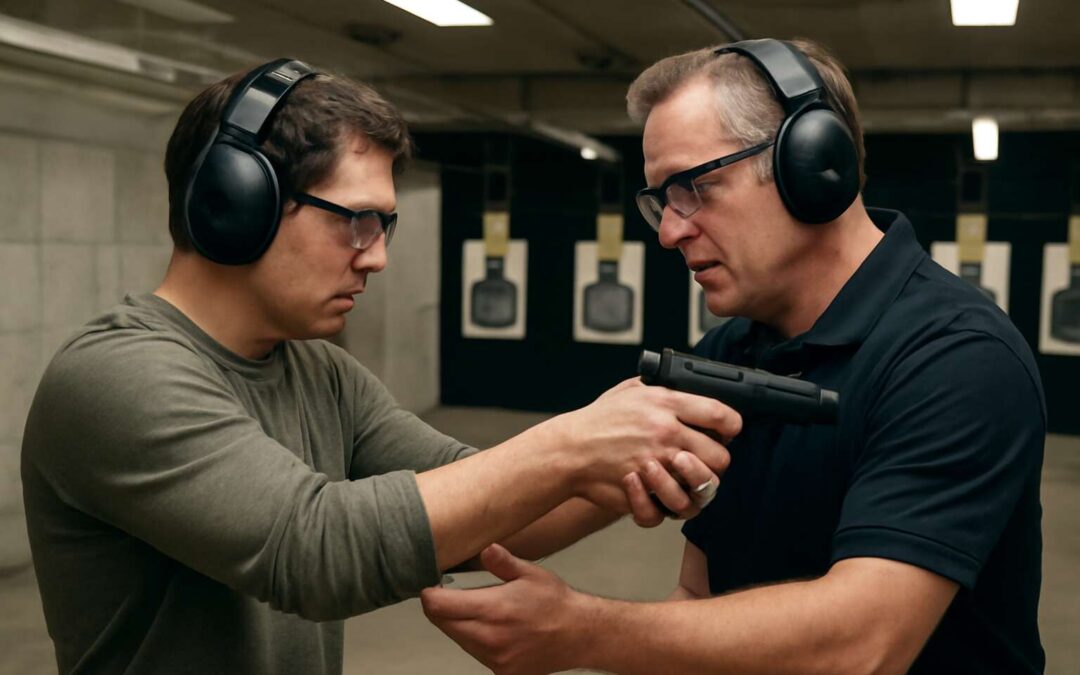
Understanding Firearms Training Courses
What Defines a Quality Firearms Training Course
“Safety isn’t luck—it’s trained habit.” In the world of firearms, understanding firearms training courses is the difference between confidence and hesitation. Across South Africa, quality education blends theory, ethics, and hands-on precision, translating into calmer, safer decision-making when it matters most.
What defines a quality firearms training course? It should present clear objectives, certified instructors, ample range time, and a rock-solid safety framework. Key characteristics include:
- Certified instructors with current credentials and ongoing professional development
- A structured curriculum that progresses from fundamentals to scenario-based drills
- Rigorous safety protocols, range supervision, and equipment checks
- Assessment and feedback that map progress to real-world responsibilities
Beyond the syllabus, a standout course connects local context—legal requirements, common scenarios, and ethical considerations—with practical skill-building. Across RSA, firearms training courses anchor theory to practice, shaping how decisions feel when pressure rises.
Overview of Training Course Levels and Specializations
“Quality training fuses calm with capability,” say seasoned instructors, and the truth lands like a bell. Understanding firearms training courses begins with recognizing that levels build trust—one careful step at a time, from grip to judgment.
Overview of training course levels and specializations follows a simple ladder. The journey begins with fundamentals, grows through handling, and rises to scenario drills. These layers anchor learning in firearms training courses across RSA, shaping measured responses under pressure.
- Fundamentals: grip, stance, sight alignment
- Intermediate: safe handling, reloads, malfunction drills
- Advanced: decision-making under stress, multi-threat drills
Specializations tailor the path: home-defense, sport shooting, or professional-use frameworks. The right mix respects local law, ethics, and maintenance, ensuring theory translates into calm, practiced action beyond the classroom.
Legal and Safety Foundations in Firearms Training
In the hush before a drill round, calm is as vital as grip and stance. “Calm is the countermeasure,” says a seasoned instructor, and that truth lands like a bell. Understanding firearms training courses starts with legal and safety foundations that bind theory to action across South Africa. A clear respect for law, ethics in use, and strict range rules keeps practice from becoming performative theatre when pressure rises!
- Legal compliance and ethics
- Safe handling and storage
- Transport and range rules
- Maintenance and inspections
When these pillars anchor every session, knowledge moves from classroom to calm, practiced action beyond the range.
In-Person vs Online and Hybrid Training Options
In South Africa’s training halls, discipline translates to outcomes; “Calm is the countermeasure,” insists a seasoned instructor, and the proverb lands like a bell. Understanding the delivery landscape means weighing in-person, online, and hybrid formats that fit real life—from work schedules to weekend range trips.
In-person sessions offer hands-on feedback, immediate safety coaching, and the camaraderie of a live range day.
- Hands-on range experience with direct instructor feedback
- Flexible online theory modules to fit busy schedules
- Integrated practical assessments bridging theory and action
Online modules deliver theory at your own pace, with quizzes to keep you honest between coffee breaks. Hybrid programs blend both, letting you tackle practical drills after knocking out the theory at home. Choosing the right firearms training courses comes down to your schedule, budget, and learning style.
Local SA providers, accreditation, and a culture of safety matter more than flashy slogans.
Who Benefits Most from Firearms Training Courses
“The first rule of safety is preparation,” a seasoned instructor once said. In South Africa, firearms training courses that blend theory with hands-on practice build calm under pressure and sharper decision-making on the range. The goal isn’t bravado but reliable outcomes—skills you can carry from the safety briefing to a weekend drill. That stillness when a drill clicks feels almost supernatural, a heartbeat you can trust!
Who benefits most from these programs? Here are the profiles most likely to gain lasting value:
- First-time gun owners seeking solid safety foundations
- Security professionals needing field-ready decision-making
- Sport shooters aiming for consistency, accuracy, and compliance
Whether you learn best by watching, listening, or hands-on repetition, firearms training courses in South Africa tailor to real life—from work shifts to weekend range trips. Accredited local providers reinforce a culture of safety that outlasts slogans, turning theory into practiced reflexes without losing the human element.
Curriculum Content and Skill Progression in Firearms Training Courses
Fundamental Handling and Safety Rules
Across rural ranges and city halls alike, firearms training courses show real gains: 68% of learners report sharper decision-making after mastering the fundamentals. The curriculum begins with fundamental handling and safety rules, then gently layers grip, stance, sight alignment, and responsible trigger discipline, all within a framework that respects safe practice and calm nerves!
Skill progression is thoughtful, moving from basic handling to integrity of practice and situational awareness. Each phase carries clear milestones and constructive feedback, so learners trace their growth with confidence. The modules naturally incorporate decision-making, safe storage and maintenance, and adherence to safety rules, building a resilient mindset.
- Fundamental handling and safety rules
- Foundations of marksmanship and sight picture
- Equipment care, storage, and legal responsibilities
By design, the pace mirrors everyday life in a South African landscape—steadily, with patience, and a touch of quiet endurance that makes firearms training courses feel earned rather than assured.
Marksmanship Fundamentals and Practice Drills
Across learner cohorts, 68% report sharper decision-making after mastering the fundamentals. In firearms training courses, curriculum content unfolds with deliberate pacing: practitioners start with overarching safety and ethics, then move through progressive exposure that builds focus, cognitive control, and situational awareness without rushing the learner.
The program emphasizes marksmanship fundamentals and practice drills at a pace that mirrors real-life rhythm. Each phase establishes clear milestones and constructive feedback, allowing learners to map growth from initial familiarity to higher-level application while maintaining safety and accountability.
Live-Fire Exercises and Range Protocols
Across recent cohorts, 68% report sharper decision-making after mastering the fundamentals. In firearms training courses, curriculum content unfolds with deliberate pacing: safety and ethics at the outset, then progressive exposure that builds focus, cognitive control, and situational awareness—without rushing learners through real-world rhythm. In South Africa, ranges emphasize accountability and measured progression.
Live-fire modules mirror that cadence, pairing theory with practiced action.
- Controlled live-fire drills targeting trigger discipline and recoil management
- Range protocols: lane discipline, equipment checks, and clear signals!
- Ethical decision-making under pressure, balancing speed and accuracy
Each phase sets milestones and constructive feedback, letting learners map growth from initial familiarity to higher-level application while upholding safety and accountability—hallmarks of professional training.
Maintenance, Storage, and Responsible Use
Within firearms training courses, the learning journey unfolds like a seasoned quest. A striking stat anchors the path: 68% of learners report sharper decision-making after mastering the fundamentals. Curriculum content advances with deliberate pacing, weaving practical knowledge for responsible use into every module rather than rushing ahead.
Skill progression centers on clear milestones—steady grip, trigger discipline, maintenance literacy, and secure storage practices—each validated through scenario-informed assessments. The aim is growth from initial familiarity to higher-order application in firearms training courses, supported by constructive feedback and accountability that keep safety at the forefront of professional training.
- Maintenance literacy: routine checks, lubrication, and fault-tracing
- Secure storage and transport: locked storage, access controls
- Responsible use: ethics, legal compliance, and community accountability
Progress Assessments and Certification Benchmarks
In firearms training courses, curriculum content is designed to move learners from basic familiarity to clear, measured mastery. Lessons unfold in concise modules that weave safe handling, decision-making, and situational awareness into every unit. Assessments are embedded, with transparent rubrics guiding feedback and progress tracking on South Africa ranges!
Progress milestones keep momentum intact. The path typically follows concrete steps, such as:
- Foundational handling and stance refinement
- Sight picture, grip consistency, and trigger control under time pressure
- Target scanning, decision-making, and shot selection in realistic drills
- Multiple-threat drills and transition between targets
- Final evaluation and readiness for certification benchmarks
Progress assessments and certification benchmarks formalize achievement, ensuring each learner demonstrates knowledge, skill, and practical judgment before advancement. This structure supports accountability and a professional standard across firearms training courses offered.
Certifications, Compliance, and Accreditation for Firearms Training Courses
National and Local Certification Standards
Certification is not a box to tick—it’s the ethics you carry. In the realm of firearms training courses, certifications, compliance, and accreditation signal more than skill—they declare a commitment to safety, accountability, and continuous improvement across South Africa. The right program elevates learners from rote handling to deliberate, principled action.
National and local standards shape what quality looks like on the range. In SA, alignment with SAQA-based qualifications and local regulatory expectations ensures programs are current and enforceable. The following bodies influence credibility:
- National qualification frameworks aligned with SAQA
- Local police service and security regulator oversight
- Periodic accreditation and audits by recognized quality assurance bodies
Choosing accredited firearms training courses builds trust and accountability, time after time. If the certificate mirrors a real-world standard rather than a momentary trend, the journey becomes a lasting commitment to safety and responsibility.
Instructor Qualifications and Course Accreditation
A certificate is more than a credential—it’s a promise kept on the range when the heat is on. In South Africa, certifications for firearms training courses are anchored in ethics, safety, and a commitment to continuous improvement rather than prestige alone.
- National qualification frameworks aligned with SAQA
- Local police service oversight and security regulator expectations
- Periodic accreditation and audits by recognized quality assurance bodies
Choosing accredited programs builds trust and accountability, ensuring the certificate mirrors real-world standards rather than a passing trend. This alignment keeps safety at the core and guarantees that instructors carry responsibility far beyond the classroom.
Record Keeping and Compliance Essentials
Certifications in firearms training courses carry weight only when paired with airtight record-keeping. A certificate is a promise, and the range expects proof: learner identity, course date, outcomes, and issuing body—all traceable and time-stamped. Compliance is thorough; regulators and police oversight see a curriculum that respects ethics and safety and a provider that treats every record as a badge of integrity.
- Learner identity, contact details, and unique enrolment number
- Complete course dates, modules completed, and assessment results
- Issued certificates with serial numbers and expiry information
Beyond the ledger, compliance means clear policy on data privacy, access controls, and timely renewal reminders. When these practices are embedded, accreditation remains meaningful and the certificate mirrors real-world standards rather than a passing trend. The result is trust that travels beyond the range and into the local community, ensuring these programs stay credible.
How to Verify a Course’s Credibility
Credibility in firearms training courses rides on a traceable chain of custody. A certificate is a promise, and the range expects proof: learner identity, course date, outcomes, and the issuing body—all time-stamped and verifiable. A veteran range boss quips, “If the trace can’t be followed, the badge is just paper.” In South Africa, that mindset turns compliance from a nuisance into a competitive edge.
- Issuer verification: confirm the issuing body is accredited and recognised
- Certificate integrity: verify serial numbers, expiry dates, and issue details
- Data handling: ensure learner identity and privacy policies are applied
- Accessibility: confirm records are searchable by regulators and employers
That alignment helps firearms training courses stay credible across communities.
Continuing Education and Recertification Requirements
Within firearms training courses, credibility wears a tangible badge. A veteran range boss quipped, “The badge travels with you; without verification, it’s only smoke.” That truth anchors every certification quest across South Africa.
Certification, compliance, and accreditation are not ornamentation but lifeblood. Continuing education and recertification requirements keep practitioners sharp, aligning practice with evolving safety standards and regulatory expectations across communities that value accountability in firearms training courses!
Key pillars include:
- Continuing education credits
- Clear recertification timelines
- Robust record-keeping policies
- Independent third-party audits
Accreditation bodies serve as custodians of trust, ensuring firearms training courses remain accessible to regulators and employers, shaping a landscape where credibility travels across South Africa with every credential.
Delivery Formats, Scheduling, and Access to Firearms Training Courses
Scheduling Options: Weeknight, Weekend, and Intensive Courses
Across South Africa’s diverse shooting landscapes, tempo matters as much as aim. A striking 72% of adult learners in practical safety training report higher retention when delivery formats blend hands-on practice with flexibility. Firearms training courses thrive when instructors mix range-time with focused coaching and accessible simulators, making safe, confident study feel natural.
Scheduling is the compass guiding progress. Weeknight, weekend, and intensive options meet different rhythms—after-work sessions, Saturday blocks, or immersive bootcamps that condense weeks into days.
- Weeknight sessions (e.g., 6–9 pm)
- Weekend cohorts (Saturday or Sunday blocks)
- Intensive bootcamps (multi-day, immersive)
Access to firearms training courses should feel seamless: multiple venues, clear enrollment windows, and responsive coordinators keep you in the loop. The result is a welcoming path to skill and responsible use, where preparation and safety walk hand in hand.
Online Theory with In-Person Skills Practice
Delivery formats for firearms training courses across South Africa strike the balance between headwork and handwork. When online theory is paired with in-person range time, retention climbs and confidence grows—without dragging you through a seminar you’ll pretend to enjoy. Short modules, practical drills, and smart simulators make safe, capable study feel natural.
- Weeknight sessions (e.g., 6–9 pm)
- Weekend cohorts (Saturday or Sunday blocks)
- Intensive bootcamps (multi-day, immersive)
Access to firearms training courses should feel seamless: multiple venues, clear enrollment windows, and responsive coordinators who keep you in the loop. The blend of Online Theory with In-Person Skills Practice lets you study at home and train on the range when readiness meets opportunity. Practical, precise, and accessible—the South African learning curve never looked so civilized.
Mobile and On-Site Training Solutions
Retention soars when theory goes online and practice comes alive on the range. Delivery formats for firearms training courses weave headwork and handwork into a living, breathing routine. When online theory meets in-person range practice, retention climbs and confidence grows—practical drills, short modules, and smart simulators make safe, capable study feel natural.
Access and scheduling are designed to bend with your life. Our firearms training courses offer clear enrollment windows and responsive coordinators, so you can pair sessions with harvest schedules, work commitments, or family duties. Short, targeted modules keep you moving, and progress is tracked with precision so you see real improvement, not busywork.
Access to training should be seamless: mobile and on-site solutions bring the range to you. Mobile ranges visit rural towns, clubs, and workplaces; multiple venues across South Africa offer convenient access while maintaining strict safety protocols.
Accessibility and Geographic Availability
Firearms training courses show the best results when delivery formats blend bite-sized theory with hands-on practice—retention can rise by up to 40% when theory leads directly to realistic drills. Short modules, realistic simulations, and guided drills turn learning into a habit! This approach keeps content accessible without sacrificing rigor.
Scheduling is designed to fit busy lives: clear enrollment windows, responsive coordinators, and sequencing that respects work, family, and harvest cycles. Learners progress at a steady pace, with milestones visible and tracked, avoiding busywork and burnout.
- Mobile and on-site access bringing the range to rural towns and workplaces
- Multiple venues across South Africa with safety protocols in place
Accessibility and geographic availability ensure learners reach the range wherever they are, with consistent quality across the country.
Cost, Scholarships, and Payment Plans
On the range and in the classroom, the truth cuts through: retention climbs up to 40% when theory leads directly into realistic drills. In firearms training courses, bite-sized theory blocks fuse with hands-on practice, turning learning into habit and sharpening decision-making when it matters most.
Scheduling respects real life in South Africa—clear enrollment windows, responsive coordinators, and sequences that fit work and family. Learners progress steadily, with milestones tracked and momentum preserved.
Access travels with you—mobile and on-site options bring the range to rural towns and workplaces, with safety protocols in place. Costs, scholarships, and payment plans keep firearms training affordable:
- Scholarships for firearms training courses for eligible learners
- Flexible payment plans with upfront deposits and instalments
- Corporate training packages with volume discounts
Choosing the Right Firearms Training Courses: A Practical Guide
Assess Your Goals: Self-Defense, Sport, or Professional Needs
In South Africa, confidence under pressure isn’t a privilege—it’s a skill honed through deliberate practice in firearms training courses. A veteran instructor once said, “Safety is a habit formed by disciplined practice,” and the results speak: steadier hands, clearer judgment, and fewer missteps when it counts.
Assess Your Goals: Self-Defense, Sport, or Professional Needs. Each aim shapes curriculum, pace, and assessments.
- Self-Defense: practical, scenario-based drills that build situational awareness and decisive action.
- Sport: precision, timing, and competition-focused modules to improve accuracy under pressure.
- Professional: certifications and advanced handling, tailored to duty or security roles.
Look for programs that blend theory with hands-on practice, respect for safety culture, and flexible scheduling. Investing in the right firearms training courses is an investment in confidence, compliance, and capability on every range and in every encounter.
Compare Curricula, Instructors, and Reviews
Confidence on the range in South Africa isn’t a lucky break—it’s the product of well-designed firearms training courses and honest feedback from peers. A veteran instructor once said, “Deliberate practice beats bravado every time.” That mindset should guide your choice when you shop for programs.
Compare curricula for real-world relevance in firearms training courses: look for modules that connect theory to practice, with scenarios that echo your needs. Pace and progression should feel logical, not rushed or pedantic.
- Curriculum coherence and practical alignment
- Instructor clarity and safety culture
- Independent reviews and cohort outcomes
When assessing instructors, value accessible coaching, constructive critique, and transparent communication about expectations. For reviews, triangulate multiple sources and seek consistency across cohorts rather than one-off anecdotes.
Facility Standards and Range Safety Protocols
Facility standards and range safety protocols define the ceiling of what firearms training courses can achieve. A veteran instructor said, ‘Deliberate practice beats bravado every time.’ That truth should guide every selection—look for spaces designed for real work: clearly demarcated lanes, controlled access, and a culture of safety that transfers to every drill. When the range environment mirrors real-life pressures, learning sticks. The right program balances rigorous standards with scenario-led practice, so progress is tangible on the line.
- Backstops and target systems are maintained to industry standards, with clear safety demarcations.
- Sightlines, lighting, and posted safety protocols reinforce course rules.
Beyond infrastructure, credentialed staff and incident reporting matter. When a program demonstrates safety culture and consistent outcomes across cohorts, firearms training courses deliver more than technique—they sharpen judgment under pressure.
What to Bring, What to Expect on Day One
A veteran instructor once said, “Deliberate practice beats bravado every time,” and that truth should guide your choice of firearms training courses from day one. I’ve seen sessions stall when hesitation replaces deliberate practice, especially on SA ranges where safety and speed collide. Look for programs that couple safety with real-world pressure, so progress feels tangible on the line!
- Photo ID and prerequisites
- Eye and ear protection
- Weather-appropriate clothing
- Notebook and pen
What to Bring and what to expect on Day One go hand in hand in firearms training courses. The first hours deliver a safety briefing, a baseline skill check, and a plan aligned to your goals—self-defence, sport, or professional needs—within a controlled environment that mirrors real-world decisions. I’ve learned the moment responsibility is owned, learning sticks.
Questions to Ask Before Enrolling
On the range, timing is everything: the right firearms training courses turn tension into precision and safety into habit. Before enrolling, map your goals—self-defense, sport, or professional needs—so the program you choose aligns with how you shoot under pressure.
- Who teaches the course, and what credentials back their instruction?
- How is safety woven into drills, and what is the live-fire balance?
- What certifications or recertification pathways accompany completion?
- Does the curriculum reflect South Africa’s legal and range realities?
Ask these questions early and your choice becomes a clear, values-driven decision for South Africa’s ranges and communities.