
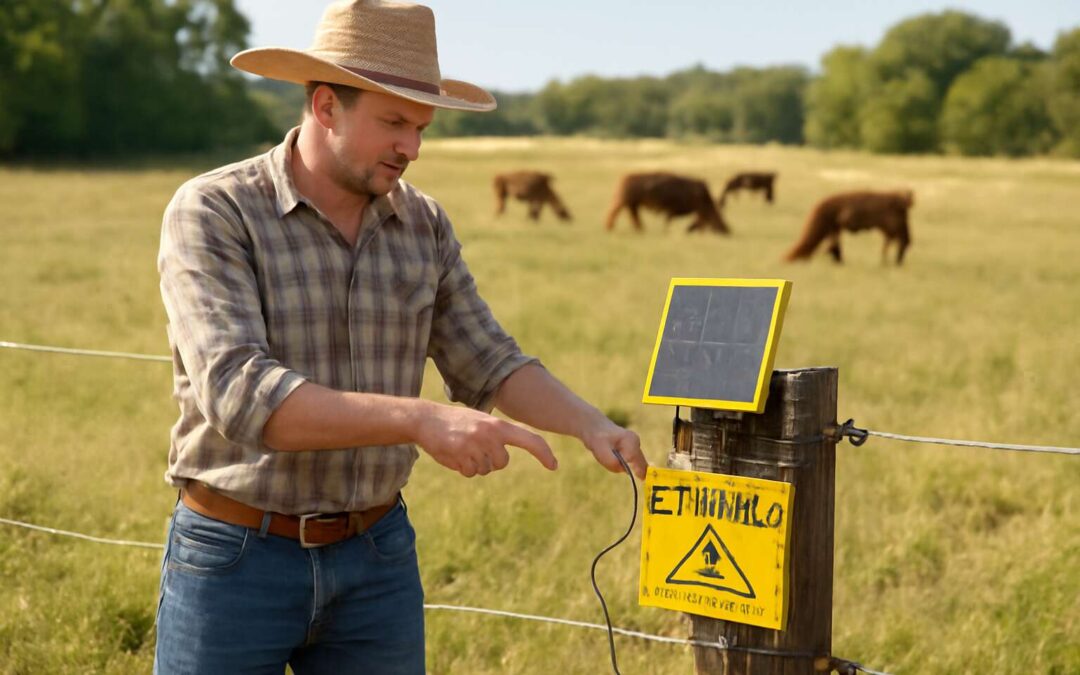
Electric fencing training programs overview
Target audience and learner goals
Fences that carry a spark can still spark questions—until you approach them with purpose. A recent safety audit found that facilities with formal training cut fence-related incidents by more than 40%, turning a volatile mix of electricity and livestock into a calm, predictable routine. Electric fence training courses are built to turn curious novices into confident operators who respect the system, the animals, and the line between them. In South Africa’s wild climate and even wilder critters, proper curriculum isn’t a luxury; it’s a necessity!
Who should enroll and what should they aim for? Target audience includes farm managers, security staff, smallholders, and maintenance crews. Learner goals include understanding safe energizing practices, testing continuity, and diagnosing faults before they become dramas.
- Safety-first operating procedures tailored to South Africa farms
- Hands-on system testing and fault tracing
- Respect for wildlife, livestock, and local regulations
Safety prerequisites and regulations
Across South Africa’s wind-worn paddocks, a sparking line can be a sentinel or a risk—until purpose steers it. A recent safety audit found facilities with formal training cut fence-related incidents by more than 40%, turning the spark into a dependable rhythm. These electric fence training courses blend theory with hands-on practice, guiding learners from cautious curiosity to disciplined operation that respects both livestock and the line.
Key components of the program include:
- Safety prerequisites: PPE, site risk assessment, and awareness of live conductors
- Regulatory alignment: compliance with South African electrical safety standards and farm-specific rules
- Hands-on modules: energizing practices, continuity testing, fault tracing, and safe fault resolution
- Wildlife and livestock considerations: humane handling and deterrence strategies aligned with local regulations
Structured, regionally tailored, and audit-ready, these modules ensure teams operate with confidence and care.
Learning outcomes and skills gained
In South Africa’s wind-worn paddocks, trained teams cut fence-related incidents by more than 40%. These electric fence training courses blend theory with hands-on practice, guiding learners from cautious curiosity to disciplined operation that respects both livestock and the line. The program offers a clear path from first contact with a live line to routine, audit-ready maintenance tuned to local farming realities.
Learning outcomes and skills gained include:
- Clear fault tracing and safe fault resolution
- Systematic energizing, continuity testing, and energizer assessment
- Humane livestock handling and welfare-aligned deterrence strategies
- Regulatory-compliant maintenance practices and documentation
Regionally tailored and audit-ready, these programs empower teams to operate with confidence and care on every farm.
Common pitfalls and safety risks
Across South Africa’s wind-worn paddocks, electric fence training courses have proven their value, with safety-minded teams slashing fence-related incidents by more than 40%. These programs blend theory with hands-on practice, guiding learners from cautious curiosity to disciplined operation that respects both livestock and the line. They chart a clear path from first contact with a live line to routine, audit-ready maintenance tailored to local farming realities.
Common pitfalls and safety risks surface when vigilance slips. Treating a live fence as ordinary, ignoring fault cues, or neglecting isolation before work invites harm.
- Underestimating the live-line hazard during routine tasks
- Skipping energizer tests and fault tracing
- Missing lockout or isolation procedures during maintenance
Addressing these issues is a core focus of the programs, fostering habits that protect people, livestock, and infrastructure.
By design, these programs foster awareness, accountability, and careful record-keeping that keep farms compliant and fences reliable.
Curriculum and learning modules
Core modules and practical skills
On South Africa’s rural farms, a fence is more than posts and wire—it’s a lifeline between herd safety and a hard-won livelihood. “A well-trained hand is the strongest wire,” a seasoned farmer once told me, and those words echo in every session of electric fence training courses.
Curriculum centers on core modules and practical skills that translate to the field. Core modules include:
- Foundations of electrical principles and safety
- Voltage management and fault diagnosis
- On-site installation, wiring, and testing
- Species-specific fencing and maintenance strategies
Practical skills emerge through on-farm simulations, fault-repair drills, and routine maintenance that keep wires singing through storms and droughts. This approach blends patience, precision, and pride, honoring the quiet strength of rural life.
Module sequencing and pacing
On South Africa’s rural farms, a fence is a lifeline—protecting both livestock and livelihoods. Studies show that properly trained crews cut fencing faults and stock losses by up to 40%. “A well-tuned circuit is a shield,” a seasoned farmer told me, and that conviction animates every electric fence training courses session, turning numbers into practical wisdom and caution into confidence.
Curriculum is sequenced to grow competence in measured steps, balancing theory with real-world application. The pacing respects the farm calendar, allowing learners to refine technique between chores and storms. These electric fence training courses unfold in stages, with concise reviews and on-site practice that ties concepts to pasture realities.
- Foundations: safety, basic principles, and measurement
- On-site wiring, installation, and circuit testing
- Species-specific fencing strategies and maintenance rhythms
- On-farm simulations and fault-repair drills
Assessments, certifications, and credentials
In South Africa’s vast veld, 30% of stock losses trace to faulty fences—a stark reminder of training’s stakes. Electric fence training courses build crews who read land and wires the way a farmer reads weather.
Curriculum and learning modules are designed for measured progress: structured modules, on-site practice, capstone fault-repair drill, and concise reviews linking theory to pasture realities. These electric fence training courses underpin every assessment and practice session.
- Practical circuit testing and fault repair
- On-farm installation and maintenance assessment
- Theory quizzes on safety and voltage basics
- Portfolio of routine maintenance plans
Assessments lead to certifications and credentials—certificate of competency, digital badge, and continuing education credits recognized by local agricultural bodies. These credentials sit on a farmer’s profile, signaling readiness for day-to-day fencing challenges and audits.
Hands-on labs and simulations
Curriculum and learning modules unfold like a map across the veld, turning theory into weather-reading and wire-sense. In our electric fence training courses, students navigate measured steps—from concepts to hands-on realities—so knowledge anchors in pastoral practice.
- Hands-on labs that replicate on-farm wiring scenarios
- High-fidelity simulations to stress-test circuits without risking stock
- Structured capstone drills for real-world fault repair and maintenance planning
This approach ensures each skill translates to pasture realities, guiding crews from classroom glow to field-ready competence.
Delivery formats and accessibility
Online self-paced vs instructor-led formats
Training that travels with your workday. Online formats are reshaping how farmers learn, and completion times are dropping fast!
For electric fence training courses, accessibility matters as much as content. We know farmers juggle long days, so online self-paced modules let you study after sundown on a laptop or phone, with mobile-friendly videos and downloadable guides. In contrast, instructor-led formats bring real-time feedback through live virtual sessions, Q&A, and structured pacing. Rural farms benefit from tools that work offline or with low bandwidth, plus captions and transcripts for quick reference.
- Online self-paced: asynchronous videos and readings
- Instructor-led: live sessions with expert feedback
- Hybrid: a balanced mix with hands-on labs
Choose what fits your farm’s tempo, budget, and connectivity.
Blended learning with fieldwork
Blended learning turns a long day in the veld into a rhythm you can actually keep. Farmers chase efficiency, not jargon, and delivery formats that pair bite-size online theory with practical fieldwork fit that demand. For electric fence training courses, the blend of self-paced modules and on-site coaching keeps skills sharp while the days stretch across sun and wind.
- Flexible scheduling that matches farm routines
- Live feedback from experts during practical windows
- On-site labs and field simulations aligned with SA conditions
This model enhances accessibility for rural operations, letting crews switch between screens and soil without losing momentum, no matter how distant the next fence is. Blended learning with fieldwork is not a compromise; it’s a scaffold that turns complexity into competence on every fence line, and a quiet spark of confidence in the dawn light.
Mobile and offline access considerations
Across South Africa’s dawn-lit veld, the right training is as vital as a charged fence. Electric fence work meets wind and sun with equal parts precision and pace, and our electric fence training courses bring theory and practice together—bite-sized online modules paired with on-site coaching—so crews sharpen skills while the day unfolds along the boundary lines.
Delivery formats and accessibility are built to travel with rural teams. The program blends self-paced modules with instructor-led sessions and micro-lessons designed for field moments. To suit patchy networks and long distances, we offer:
- Mobile-friendly content that adapts to smartphones and tablets
- Offline access with downloadable modules for field use
- Low-bandwidth video options and text-based summaries
- Progress tracking that works with intermittent connectivity
These considerations keep learning accessible from dawn to dusk across SA farms, so training stays with you wherever the next fence sits.
Accessibility and inclusivity options
Across SA’s dawn-lit veld, electric fence training courses marry technique with accessibility. These programs are designed to travel with rural teams, offering formats that align with field rhythms and diverse learner needs. The aim is clear: learning that fits the day and locale, not the other way around.
- Multilingual and plain-language materials that speak to different backgrounds
- Captioned videos and screen-reader friendly formats for inclusive access
- Flexible scheduling with support channels and adaptive pacing for remote sites
From boundary to boundary, the learning path remains visible, navigable, and welcoming, no matter the route across the SA landscape.
Pricing, enrollment, and value proposition
Tuition ranges and what’s included
Electric fences carry more than power; they promise safer paddocks and steadier livelihoods. A veteran trainer once whispered, “Electric fences are poetry written in current—precise, practical, and alive.” Across South Africa, learners in electric fence training courses report sharper risk awareness and the ability to protect both stock and assets with calmer hands and clearer judgment.
Pricing is straightforward and flexible; tuition ranges from R2,500 to R6,000, depending on format—self-paced online, instructor-led weekends, or blended field days. Enrollment is simple: submit a short application, meet the prerequisites, and reserve a seat in the next cohort. The value lies in hands-on labs, ongoing updates, and a certificate that travels with you.
- Course manual and materials
- Online simulations and practical labs
- Certification prep and fieldwork mentoring
Discounts, payment plans, and financing
“Electric fences are poetry written in current—precise, practical, and alive.” A veteran trainer once whispered this, and it shows in our pricing philosophy: electric fence training courses in SA are transparent and flexible, with options for online self-paced study, instructor-led weekends, or blended field days that fit busy farms and budgets.
- Early-bird discounts for next-cohort sign-ups
- Bundled pricing when pairing modules
- Flexible payment plans and financing with partners
Enrollment is straightforward: a quick online application, prerequisite checks, and a reserved seat in the next cohort. The value comes from hands-on labs, ongoing updates, and a certificate that travels with you across South Africa.
Enrollment steps and prerequisites
On South African farms, a properly charged fence saves stock, time, and nerves—and the ROI is palpable. Our electric fence training courses offer pricing that’s as transparent as a sunrise and as flexible as a well-trained stockman: early-bird options, bundled modules, and financing that fits harvest calendars.
Enrollment steps are simple enough to fit between irrigation checks:
- Submit a quick online application
- We perform straightforward prerequisite checks to ensure readiness
- Reserve your seat in the next cohort
- Receive access to pre-course materials and the official calendar
Prerequisites keep things fair and focused:
- Minimum age 18
- Involvement in a farming operation or related business
- Internet access or offline materials for study
- Ability to commit to the program schedule
The value is tangible—practical, field-ready skills that translate to fewer escapes and smoother operations, with a credential that travels across the country and supports ongoing professional growth in the electric fence training courses space.
Refunds, guarantees, and return on investment
“A fence you can trust is a hedge against tomorrow’s losses.” In rural South Africa, electric fence training courses turn boundary lines into steady margins, with enrollment structured for busy farming days.
Pricing is transparent and flexible to fit harvest calendars. Enrollment is straightforward, with seats reserved in the next cohort and access to pre-course materials. To ease decision-making, the program includes:
- Early-bird and bundled options
- Flexible payment plans
- Group discounts for farming teams
Refunds and guarantees are clear, underscoring the return on investment. The value grows as field-ready skills reduce escapes, streamline operations, and credential holders move more freely across South Africa’s farming communities—an enduring advantage in this space.