
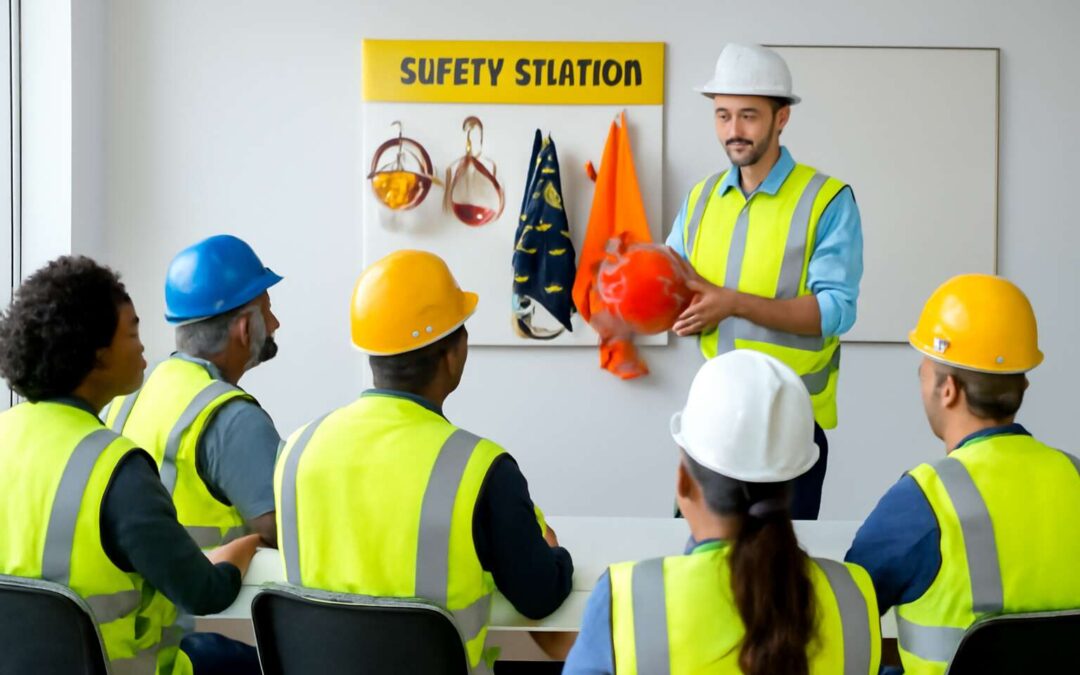
Understanding Health and Safety Training
Principles of Workplace Safety
Understanding Health and Safety Training Principles of Workplace Safety is not a slogan; it’s a culture, and in South Africa, workplaces with robust training courses health and safety records report fewer injuries and higher morale!
Principles of effective training courses health and safety hinge on clarity, relevance, and accessibility. They translate complex regulations into practical action, without jargon, and respect diverse workplaces—from factory floors to office bays. When content mirrors daily tasks, every pause for risk assessment feels less like punishment and more like prudence.
- Clear, practical scenarios that map to daily tasks
- Accessible materials in multiple languages and formats
- Regular refreshers to embed memory and adjust to new risks
Key Regulations and Compliance Basics
A sharp audit can feel like a whisper that becomes a shout on the shop floor—one overlooked rule can unravel a night shift! In South Africa, workplaces that invest in training courses health and safety see up to 30% fewer injuries and steadier morale.
Understanding Health and Safety Training Key Regulations and Compliance Basics means translating statutes into daily practice. The Occupational Health and Safety Act (OHSA) sets the non-negotiables, while regulations shape how tasks are performed, documented, and reviewed. This discipline is not punishment; it is prudence that guards people and profits.
- OHSA and Regulations
- General Safety Regulations
- Hazardous Substances and Electrical Regulations
Newcomers, supervisors, and leaders alike must align compliance with real work, ensuring audits are predicted and not feared; quick risk assessments, incident learnings, and ongoing refreshers keep knowledge fresh.
Roles and Responsibilities of Employees
On the shop floor, a single lapse can eclipse days of diligence; in South Africa, teams embracing training courses health and safety see tangible shifts—up to 30% fewer injuries and steadier morale. This is not punishment but daily prudence, turning policy into practiced habit.
Understanding who bears responsibility helps translate statutes into everyday actions. Employees are frontline guardians, expected to follow procedures, wear PPE, report hazards, and engage in briefings to keep safeguards alive.
Supervisors translate policy into practice: they lead toolbox talks, check controls, and ensure training remains current. Leaders set the tone and model accountability, keeping commitment to safety visible.
- Employees follow procedures, wear PPE, and report hazards.
- Supervisors lead toolbox talks, verify controls, and ensure training is current.
- Leaders provide resources, review learnings, and model safety accountability.
Together, these roles weave safety into daily work, making learning through practice feel natural.
Risk Assessment and Hazard Identification
In South Africa, teams that treat risk assessment as instinctive practice see injuries drop by as much as 30%. The unseen corners of a workshop stop whispering and start signaling—hazards identified, controls activated, habits formed. Through training courses health and safety, workers learn to read the floor like a map of potential harm and to act before harm acts back.
Understanding risk assessment hinges on hazard identification. What could go wrong, where, and who would be affected? The right approach translates concern into action via clear checks and ongoing conversation about safety. Consider these foundational moves:
These outcomes come to life through training courses health and safety.
- Potential hazards on the shop floor
- People at risk and likely exposure scenarios
- Existing controls and common gaps
When these elements breathe together, training becomes second nature—quiet, but relentless.
Course Types and Formats
Online vs In-Person Training
Safety feels personal in South Africa’s workplaces. The choice of course type and format can turn a dry syllabus into real, usable practice. The idea of training courses health and safety should evoke a lived discipline that travels from floor to boardroom.
Online formats offer flexibility and pace, while in-person sessions provide tactile learning and instant feedback. A blended approach often works best.
- Async online modules you complete at your own pace
- Live virtual classes with real-time Q&A
- On-site practical workshops that mirror actual hazards
- Blended programs combining theory with hands-on drills
When choosing a format, consider accessibility, language, and the daily rhythms of your team. In SA, formats that fit work patterns and transport realities are not only convenient but vital.
Interactive E-Learning Modules
Safety is not a policy, it’s a rhythm you bring to every shift. In South Africa’s workplaces, a single moment of practice can echo from the workshop to the boardroom, turning fear into fluent action and risk into routine.
Course types and formats are the conduit for that transformation. Interactive E-Learning Modules offer bite-sized scenarios you can revisit at pace, while live sessions answer questions in real time. These training courses health and safety formats let teams absorb risk in a living, actionable way.
- Async online modules you complete at your own pace
- Live virtual classes with real-time Q&A
- On-site practical workshops that mirror actual hazards
- Blended programs combining theory with hands-on drills
Certification and Recertification Courses
Safety is the rhythm the workplace keeps when lights flicker on. In South Africa, 60% of safety incidents trace back to training that’s outdated or incomplete.
Course Types and Formats shape how risk becomes routine. Certification and Recertification Courses anchor learning in real tasks, offering pathways that fit busy shifts and changing regulations. When expectations are clear, training courses health and safety become living references, not paperwork.
- Competency assessments tied to daily duties
- Practical demonstrations that mirror workshop hazards
- Structured recertification rhythms with progressive credits
Onsite Practical Training
In South Africa, 60% of safety incidents trace back to training that’s outdated or incomplete. Course Types and Formats shape how risk becomes routine, and onsite practical training puts learning where work happens. It’s about real tasks, not rote checklists, with formats designed to fit busy shifts and evolving regulations. When teams practice in the actual workshop or field, what’s learned sticks and compliance feels like daily care. This approach ties directly into training courses health and safety in daily practice.
Onsite Practical Training translates theory into muscle memory. We embed practical demonstrations and structured drills into the workday, using your own tools and hazards. A typical session includes:
- Hands-on hazard drills that mirror everyday tasks
- Toolbox talks and PPE checks tailored to your site
- Live task simulations reflecting workshop hazards
- Immediate feedback and short duration refreshers to fit rosters
Microlearning and Refresher Sessions
Microlearning and refresher sessions reshape how safety embeds itself in daily work. Tiny lessons arrive exactly when they’re needed, turning fleeting moments into lasting memory. In the realm of training courses health and safety, bite-sized modules fit busy shifts and evolving regulations, making learning feel more like practice than paperwork. It’s about presence, not pressure!
- Short, focused modules staff can complete between tasks
- Just-in-time refreshers triggered by real-world hazards
- Mobile-friendly content for breaks or travel between sites
These formats seed competence into everyday routines, turning safety into a natural reflex rather than a checkbox. For teams in high-stakes environments, the cadence matters—short, regular touchpoints that respect shift patterns and real hazards. The result isn’t novelty; it’s reliability, a quiet revolution in how safety is lived on site.
Compliance Standards and Certifications
Regulatory Frameworks and Legal Obligations
“Safety is a culture, not a checklist.” In South Africa, that culture guides you through Compliance Standards and Certifications that shape training. When organisations invest in training courses health and safety, they weave regulatory frameworks and legal obligations into everyday practice.
Key standards span ISO 45001 and local OHSA requirements, with COIDA and MHSA defining obligations across sectors.
- ISO 45001 and related systems
- OHSA/MHSA compliance
- COIDA considerations
Legal obligations ensure auditable records and clear accountability. Training becomes a bright beacon rather than a checkbox, guiding teams across South Africa toward safer, steadier performance.
Certifications and Accreditation Bodies
Compliance standards aren’t dusty rules; they’re the living spine of safe work. In South Africa, organisations align with ISO 45001 alongside local OHSA and MHSA expectations, while COIDA considerations shape how records are kept and what must be demonstrated. Accredited training providers guarantee that training courses health and safety meet rigorous criteria—from learning outcomes to assessment integrity. When governance and learning converge, safety stops being a checkbox and becomes a culture of auditable practice across every department.
Certification and accreditation bodies anchor credibility, guiding organisations to select providers who deliver tangible, certifiable outcomes.
- SAQA – South African Qualifications Authority
- SETA – Sector Education and Training Authority
- QCTO – Quality Council for Trades and Occupations
This alignment brings clarity for audits, regulators, and the workforce alike.
Recordkeeping, Audits, and Verification
Compliance standards aren’t relics; they’re the living spine of a resilient safety culture. In South Africa, ISO 45001 aligns with OHSA and MHSA, while COIDA shapes how records are kept and what must be demonstrated. Accredited training providers ensure that training courses health and safety meet rigorous criteria—from learning outcomes to assessment integrity. When governance and learning converge, safety becomes more than a checkbox; it becomes auditable practice across every department.
- Comprehensive training records are kept—course titles, dates, participant names, facilitators, and assessment results.
- Learning outcomes are documented and practical competency evidence is gathered to support audits and regulatory reviews.
- Certification status and renewal dates are checked against SAQA, SETA, and QCTO records to align with COIDA expectations.
Robust recordkeeping and verification turn compliance into a living routine, not a paper chase. Audits then confirm a true safety culture that travels through every South African workplace.
Interpreting Safety Data Sheets and Hazard Communications
In SA workplaces, hazard communication is a quiet backbone; when it’s clear, safety language becomes action. Interpreting Safety Data Sheets (SDS) and hazard communications isn’t trivia—it’s a core competency that underpins every training courses health and safety program.
Qualified providers structure this learning around practical reading skills and regulatory alignment.
- GHS pictograms and signal words
- Section-by-section SDS interpretation (1–16)
- Hazard statements and precautionary statements
- Label elements and safe handling communications
It also aligns with SAQA, SETA, and QCTO frameworks, reinforcing audits and certification through practical assessments that travel from the classroom into the workshop. This approach makes training courses health and safety more than compliance; it becomes practiced fluency!
Benefits and Return on Investment
Reducing Incidents and Injuries
Across South Africa, a smart safety program pays for itself fast. When a factory implemented targeted safety training, incidents dropped by 32% and downtime shrank accordingly. That kind of return isn’t luck—it’s the result of consistent risk awareness and practical skills put into action on the floor!
Benefits extend beyond fewer injuries. Reduced insurance premiums, lower medical costs, and steadier production protect the bottom line. This is where training courses health and safety delivers real ROI.
- Lower downtime and productivity losses
- Decreased medical or compensation claims
- Better morale and staff retention
Ultimately, safer teams work more consistently and with greater focus.
Improving Productivity and Morale
On South Africa’s factory floors, safety as a habit pays dividends. I’ve seen teams where a disciplined safety program cuts downtime and lifts output, with productivity gains appearing within months. This isn’t luck—it’s a culture that turns training into action, shift after shift.
Benefits and ROI ripple beyond fewer injuries. When people can foresee hazards and respond calmly, maintenance interruptions shrink and morale climbs, nudging the bottom line in the right direction. This is where training courses health and safety translate into hard ROI.
- Sharper productivity and fewer unplanned stoppages
- Lower insurance and medical costs over the year
- Elevated morale and stronger retention
In the end, safer teams move with steadier cadence and sharper focus, a quiet, profitable elegance on the factory floor.
Cost Considerations and Budgeting for Training
Across South Africa’s factory floors, a recent survey shows teams with structured safety training cut downtime by up to 30% within a year. Training courses health and safety aren’t mere compliance boxes; they’re catalysts for real, steady action on the line.
ROI reveals itself in sharper productivity, fewer unplanned stops, and lower insurance costs.
- Lower downtime and faster response times
- Reduced medical and workers’ compensation costs
- Improved morale and stronger retention
When budgeting, cost considerations include upfront spend, facilitator fees, licensing, and the cost of time away from operations. In South Africa, a blended, phased approach to training courses health and safety often yields faster ROI and broader reach.
Measuring Training Effectiveness and KPIs
Across South Africa’s factory floors, teams with structured training courses health and safety cut downtime by up to 30% within a year. When safety programs are treated as a business asset, the returns show up as steadier throughput, fewer unplanned stops, and insurance costs that level out over time—ROI becomes visible in everyday gains, not just quarterly reports.
- Training completion rate and time-to-competence
- Post-training assessment scores and knowledge retention
- Incident and near-miss rates after training
- Downtime linked to process changes
- Audit findings and corrective action closure speed
Measured well, outcomes translate into fewer emergency stops, steadier lines, and morale that endures—proof that people and performance rise together.
Best Practices for Training Delivery
Customization and Learner Needs Analysis
In South Africa, tailoring training courses health and safety to the room boosts retention and reduces risk more effectively than generic sessions. “Safety is a conversation, not a checklist,” proclaims a seasoned trainer, and the line sticks when content mirrors actual work and team dynamics.
Best practices in delivery rely on a learner needs analysis that decodes who is in the room, what they read easily, and how they prefer to practice under pressure. In multilingual workplaces, clarity, relatable examples, and realistic scenarios are not luxuries but necessities. The aim is to align content with daily tasks, risk exposure, and available resources—without burdening novices or overwhelming seasoned staff.
- Language and terminology alignment
- Delivery pace and cognitive load
- Accessibility and inclusivity (disabilities, equipment)
This approach frames learning as a living discipline within training courses health and safety, elevating relevance, engagement, and long-term retention across diverse SA teams.
Engaging Content and Practical Simulations
‘Safety is a conversation, not a checklist,’ a seasoned trainer likes to remind us, and the room nods in unison. For training courses health and safety in South Africa, engaging content that mirrors the mess and tempo of daily work wins the day—stories, concrete roles, and outcomes that feel immediate rather than theoretical.
Best practices for delivery include:
- Contextual tasks drawn from real SA work scenarios
- Clear, inclusive language that respects multilingual teams
- Practice under pressure using safe, supervised simulations
Practical simulations bring theory to life—stop-start drills, equipment handling, and near-miss debates that land in memory. Content should be accessible, with adjustable pacing, visuals, and examples that speak to varied reading levels. When learners can rehearse decisions in a safe space, retention follows and confidence grows across teams. That is why these programs evolve into practical, lived experience across SA teams.
Trainers’ Qualifications and Soft Skills
A memorable safety conversation beats a dry checklist every time. In South Africa, training courses health and safety succeed when qualified trainers fuse deep technical know-how with human warmth, especially for multilingual crews. Memory climbs when content is told as stories and tested in safe, supervised drills—turning caution into practiced reflex. The aim is a culture where safety feels immediate, not theoretical; a room where questions sparkle and every learner carries the lesson home.
- Qualified trainers with SA-context knowledge and ongoing professional development.
- Soft skills: storytelling, empathy, inclusive language, and facilitation of safe, judgment-free discussions.
- Adaptive delivery: culturally aware, multilingual visuals, and pacing tuned to varied literacy levels.
These elements transform learning into lived safety across SA teams.
Accessibility, Inclusivity, and Language Considerations
Safety is a living conversation, not a dry checklist. In South Africa, multilingual crews demand accessibility as a core metric. Stories plant memory far more reliably than rote drills—so the aim of training courses health and safety is immediate comprehension and confident application, not theoretical buzzwords.
Best practices for delivery hinge on accessibility, inclusivity, and language. Materials should be captioned, translated, and screen-reader friendly; visuals with high contrast; simple language with glossaries; and sign-language or interpreter options when needed.
- Plain language and local glossary usage
- Captioned videos and sign-language support
- Multilingual signage and accessible audio
Engagement thrives when questions are welcomed and content is chunked into safe, supervised segments. In SA, culturally aware pacing and local examples turn safety from obligation into instinct!
Evaluation, Feedback Loops, and Continuous Improvement
Safety is a habit, not a lecture; in South Africa, 70% forget safety steps within a week unless feedback is immediate, turning drills into reflexes instead of memories. Real-world retention climbs when learners can apply a concept right after a module, not after a week of doomscrolling through slides.
Best practices for evaluating delivery hinge on immediate, actionable feedback and transparent metrics. Evaluation thrives on feedback loops and clear indicators of understanding, feeding continuous improvement for training courses health and safety programs.
When feedback evolves into action, content is refined in real time and safety instincts sharpen rather than atrophying into boredom. In SA, culturally aware check-ins and local context keep improvement practical and relatable.