
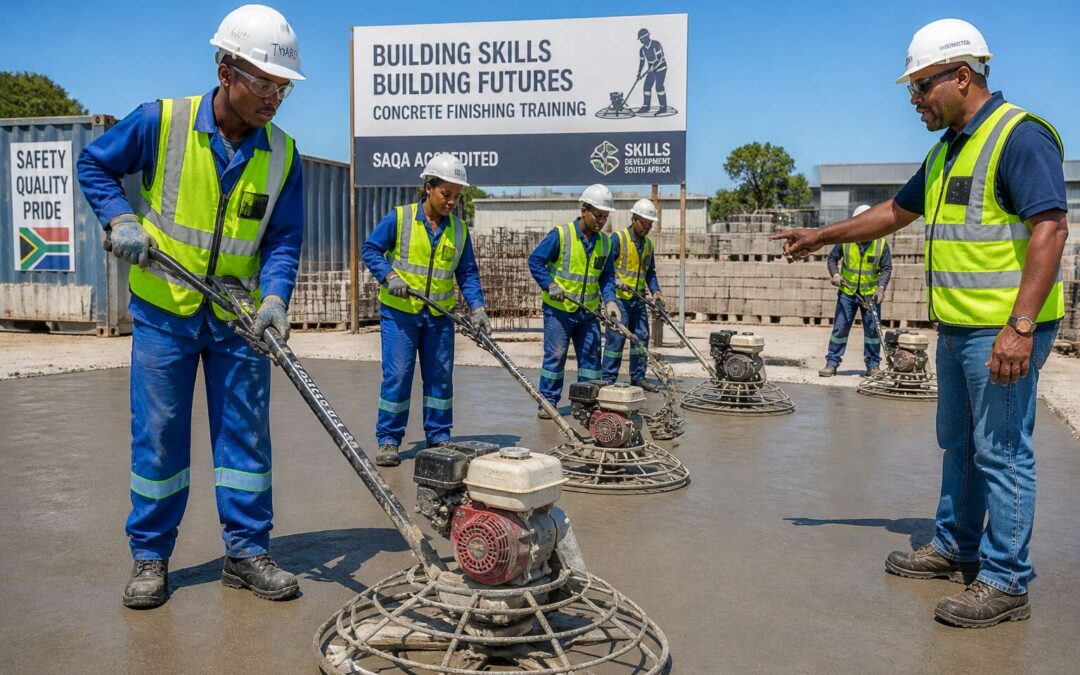
Why the South African Construction Sector Demands Certified Concrete Skills
The Growing Need for Specialised Concrete Workmanship in SA
In the past decade, nearly 85% of structural failures in South African buildings traced back to defective concrete workmanship. That statistic should worry every developer, contractor, and homeowner in this country.
I have walked enough construction sites to know one thing: concrete offers no second chances. Its flaws become permanent, sometimes lethal. The demand for certified concrete skills now decides who builds safely and who builds dangerously.
The industry faces a peculiar predicament. There is no shortage of labour, but there is a genuine scarcity of workers who understand curing, compaction, and mix ratios. Specialised concrete workmanship demands method, not just muscle!
- Accurate slump test interpretation
- Correct moisture control during curing
- Early detection of alkali aggregate reactions
This is why concrete training courses south africa are becoming a vital checkpoint for the whole sector. When workplaces invest in proper training, they invest in stability itself.
How Training Reduces On-Site Defects and Material Waste
Certification gives South African contractors a rare luxury: accountability you can actually prove. I have watched foremen accept a verbal promise of experience, only to discover the truth after a wall cracked. A certificate validates knowledge of the specific procedures that keep a structure standing. When a pour collapses, the paperwork shows which step failed and who was accountable. In an industry where verbal assurances often conceal unclear competency, that clarity is priceless.
Training trims the waste bill too. A qualified worker uses less material because they stop making costly errors. They inspect the aggregate, brace the formwork, and test the mix before it touches the ground. That diligence prevents chipped slabs, demolished walls, and fresh concrete hardening in a skip. Concrete training courses south africa convert expensive guesswork into standard procedure, and project budgets feel the difference immediately!
Government and Industry Regulations Driving Certification
The South African construction sector operates under strict oversight. The National Building Regulations and the Construction Industry Development Board require contractors to document the skills of their workforce. A verbal assurance of experience no longer satisfies inspectors or project owners. They demand proof of formal training, which is why concrete training courses south africa have become a non negotiable part of project planning.
- Correct mix design per SANS 10100
- Proper curing and compaction procedures
- Safe formwork removal and load testing
These requirements push companies to invest in verified competence. When a tender is evaluated, the presence of certified operators often separates the winning bid from the rest. Without that paperwork, a contractor risks fines or project suspension. The sector has shifted from trusting promises to checking credentials, and that shift protects every stakeholder on site.
The Impact of Proper Training on Project Safety and Durability
There is no second chance when the mixer truck rolls onto a site. That finality is why the South African construction sector refuses to accept verbal promises. Certified concrete skills prove a worker can handle the variables, from moisture content to ambient temperature. Without that proof, project owners face unseen risk. I have watched a team struggle with a honeycombed column, while the certified crew beside them finished cleanly in half the time. Proper training changes the entire lifecycle of a structure! It ensures compaction eliminates voids, curing locks in strength, and formwork removal occurs only when the concrete can bear its own load.
The difference shows up in the finished product:
- Fewer crack patterns that permit water ingress
- Higher load capacity in beams and foundations
- Longer service life with lower maintenance spend
Concrete training courses south africa deliver these outcomes, making them a non negotiable expense for any serious contractor.
Exploring the Different Levels of Concrete Training Programmes
Short Courses for Basic Concrete Handling and Placing
The first hour of concrete training usually decides how a worker handles a trowel for the next decade. In South Africa, short courses for basic concrete handling and placing teach the correct sequence of actions. A trainee learns to manage a wheelbarrow, level a screed, and finish edges without rushing. Concrete training courses south africa span from these foundational sessions to advanced qualifications.
Here is what a typical basic programme covers:
- Correct mixing ratios for different site conditions
- Safe movement of wet concrete across uneven ground
- Simple slump testing to gauge consistency
Above that level, instruction moves toward formwork alignment and reinforcement placement. Each tier of concrete training courses south africa expands the worker’s ability to assess a surface’s condition and anticipate curing. The progression is linear and practical.
Further Education and Training Certificates in Concrete Technology
Further Education and Training certificates in concrete technology mark a deliberate step beyond site-level handling. I have seen artisans move from basic placement into formal FET programmes that deepen their grasp of mix design, structural behaviour, and quality assurance. These qualifications sit within the broader field of concrete training courses south africa, bridging short courses and advanced diplomas!
What distinguishes FET certificates? They demand analytical work alongside practical assessment. Learners examine aggregate grading, curing regimes, and test result interpretation. A typical FET pathway includes:
- Concrete technology fundamentals and material science
- Formwork design and temporary works
- Quality control and site supervision
The progression is linear. Each level improves a worker’s ability to anticipate curing and assess surface conditions.
Trade-Tested Qualifications for Concrete Masons and Finishers
The trade test is where a worker’s claim to skill meets independent judgement. For concrete masons and finishers, this assessment separates practical ability from classroom understanding. A trade tested qualification confirms that a person can perform the actual work to an accepted standard.
Assessors typically evaluate tasks like surface finishing, edge work, and curing application. Candidates must show they can work within tolerances and correct their own errors on the spot. The certification is portable and recognised across provinces.
- Placing and finishing concrete to a level of 3 mm over 3 metres
- Applying curing compounds without surface damage
- Cutting joints at precise intervals
Preparation through concrete training courses south africa gives workers repeated exposure to the test format. Passing this level opens opportunities for site supervision roles and higher pay scales.
Advanced Diplomas and Artisan Programmes in Concrete Construction
For those ready to move beyond foundational skills, advanced diplomas and artisan programmes reshape a worker’s trajectory. These qualifications demand a deeper command of concrete science, including mix design, stress analysis, and quality control protocols. Learners engage with complex site logistics and supervisory accountability. The artisan route, often apprenticed, pairs structured theory with extended on‑the‑job mentorship.
Concrete training courses south africa at this level typically include:
– Advanced formwork and falsework systems
– Non‑destructive testing methods
– Project costing and resource planning
– Concrete repair and rehabilitation techniques
Graduates emerge as candidates for site agent roles or specialised subcontracting. The curriculum pushes beyond execution into decision making, where a single misjudgement in curing or compaction can cost thousands. This is where professional identity in the trade solidifies.
Specialised Short Courses: Concrete Repair, Testing, and Inspection
Over 60% of all structural failures in South Africa trace back to material defects or improper testing, not design errors. Specialised short courses strip away the guesswork from concrete repair and inspection. These programmes are not for beginners. They serve the foreman who watched a pour fail, or the technician who needs to prove a slab’s integrity before sign-off.
The training zeroes in on fault finding and forensic diagnosis. You learn to read a surface, to see the warning signs that concrete is silently degrading. These concrete training courses south africa focus on a distinct skill set:
– Diagnosing delamination and spalling before they spread
– Interpreting core sample results with accuracy
– Selecting and applying polymer modified repair mortars
The content is rigorous and the clinical. Inspectors leave with an eye for detail that catches microscopic cracks invisible to a casual glance. It is a tactical advantage on any site where downtime is costly and mistakes are final. Research confirms early intervention through accurate assessment reduces lifecycle costs by nearly 40%. This course makes you the person who spots the flaw before it becomes a liability.
Core Subjects and Practical Skills You Can Expect to Learn
Understanding Concrete Mix Designs and Material Properties
A single percentage point in the water-cement ratio can determine whether a slab lasts decades or crumbles in five years. In concrete training courses south africa, students learn to decode how cement, water, aggregates, and admixtures interact. The water-cement ratio alone makes or breaks a structure’s lifespan.
Practical skills often include:
- Identifying aggregate gradation and moisture content
- Calculating yield and density
- Adjusting mixes for temperature and humidity
These exercises build practical judgment. You will also handle fresh concrete, testing slump and air content! Material properties such as compressive strength, permeability, and thermal expansion influence every decision. South African aggregates vary wildly, from dolomite to granite, so regional knowledge matters deeply. That is why hands-on training is essential.
Formwork Construction, Striking, and Safety Procedures
Formwork is the temporary mold that shapes wet concrete. In concrete training courses south africa, students learn to erect formwork that withstands hydrostatic pressure without shifting. They measure plumb lines, brace against wind, and apply release agents for clean stripping.
Striking is the removal of formwork after concrete gains strength. Timing depends on temperature, mix design, and load conditions. Students practise propping and re-shoring to prevent collapse. Safety procedures cover PPE, ladder use, and the dangers of premature removal.
- Aluminium and steel systems for repetitive pours
- Timber formwork for custom geometries
- Flying forms for multi-storey slabs
Each system carries specific load ratings and tolerances. Instructors emphasise inspection before every pour. A single loose tie can cause a blowout! We drill these routines until they become reflexive.
Reinforcement Placement and Pre-Pour Inspections
Reinforcement placement demands precision. In concrete training courses south africa, students learn to read bending schedules and position steel with exact cover. They tie laps securely, maintaining spacing that meets structural drawings. A misplaced bar can alter load paths silently.
Pre-pour inspections require a methodical eye. Trainees check chairs, spacers, and continuity of mesh. They verify that no debris or water pools in the form. They confirm that props remain firm.
Typical inspection points include:
- Bar diameter and grade
- Lap lengths and stagger
- Cover distance from form face
These checks happen before any concrete arrives. Our instructors force us to slow down, because haste here creates hidden defects.
Concrete Placement, Compaction, and Finishing Techniques
Pouring concrete is a silent battle against gravity, timing, and physics. In concrete training courses south africa, the placement phase becomes a disciplined science. Trainees learn to direct the chute with purpose, ensuring the mix lands within arm’s reach of its final resting place. They avoid segregation by dropping concrete from controlled heights, never letting the aggregate separate from the paste.
Compaction follows immediately, demanding a steady hand with the poker vibrator. Insert and withdraw slowly, allowing trapped air to escape as the surface shimmers with moisture. The operator listens for the change in sound, a duller tone signalling that consolidation is complete. Over-vibration causes segregation, while under-vibration leaves honeycombing.
Finishing techniques close the sequence, where the trowel becomes an extension of the hand. Students practice bull-floating to level the surface, then wait for the bleed water to evaporate before edging and jointing.
– Floating for a smooth, dense finish
– Brooming for traction on ramps and walkways
– Troweling for hardened, polished surfaces
The final texture depends on the application and the weather. Our instructors emphasise reading the concrete’s behaviour, not just following a sequence. The craft lives in the rhythm of placement, the sensitivity to compaction, and the patience of finishing. That rhythm separates enduring structures from those that fail quietly.
How to Evaluate and Select a Reputable Training Provider in South Africa
Accreditation Bodies and Quality Assurance (CETA, QCTO, and SAQA)
Selecting a training provider without verifying its credentials is a gamble. In South Africa, the construction sector has specific oversight, and a certificate from an unaccredited entity holds no weight on a site. Your first step is to check the provider’s status with the Quality Council for Trades and Occupations (QCTO), which sets the standards for occupational qualifications. The Construction Education and Training Authority (CETA) is equally critical, as it funds and monitors skills development within the industry. The South African Qualifications Authority (SAQA) ensures that the qualification itself is registered on the National Qualifications Framework.
Here is a practical checklist to guide your evaluation:
1. Confirm the provider is an accredited training provider with CETA for the specific skills programme you need.
2. Verify the course is registered with QCTO and that the provider has a valid scope of delivery.
3. Cross-check the qualification on the SAQA database to ensure it equates to the correct NQF level.
Matching the curriculum to actual working conditions requires more than a glance at a brochure. Demand to see the lesson plans and inspect the facilities where practical work happens. many concrete training courses south africa offer theoretical verification, but you need to confirm that the trainer has recent, hands-on experience with modern formwork systems or pump lines. If the mock-up area lacks the materials and tools found on a real site, the training will not translate into usable skill. Accreditation is the baseline, but the proof is in the preparation.
Comparing Classroom-Based, Online, and On-Site Practical Training
A CETA scope does not guarantee a graduate can build. In most concrete training courses south africa, the mix of classroom, online, and on-site hours decides whether the learner leaves site ready or merely informed. I have watched learners recite cure tables perfectly, then struggle to keep a float level on wet concrete.
Classroom teaching delivers mix design and safety rules efficiently. Online platforms offer flexibility for people already employed. Neither mode simulates the pressure of a pour when the pump line blocks and the slump is wrong. On-site training is the only way to verify judgment under real conditions.
- Classroom hours build calculation skills but miss the noise and pace of a live site.
- Online learning suits supervisors who need refresher knowledge, not raw beginners.
- On-site sessions expose how a learner handles vibration, finish, and curing in actual weather.
Assessing Trainer Expertise and Industry Experience
The challenge is that most marketing materials for concrete training courses south africa look identical. Where the glossy brochure ends, the real assessment begins. I want to know which sites the instructor has actually worked on, not just which certificates they have collected. A trainer who has spent years fixing bleeding screeds or managing pump breakdowns will teach with a gravity that a purely academic lecturer cannot match.
I prefer to verify claims physically. Ask for contactable references from past employers or learners. Visit the training yard unannounced to inspect the equipment condition. Look for rust on the floats or worn trowel blades.
For the trainer’s career history, consider these points:
– Years spent as a working foreman or artisan, not just a facilitator.
– Specific experience with South African materials like Highveld aggregates or coastal cements.
– Track record of apprentices placed successfully on active construction projects.
A reputable provider will happily supply these details. If they hesitate, or rush you to the booking form, that silence tells you everything you need to know about their concrete training courses south africa. The right facilitator will also talk about their failures, because those lessons are usually the ones worth paying for.
Checking Training Facilities, Equipment, and Simulated Work Environments
A training yard reveals more than any prospectus ever will. Walk the site and take note of the atmosphere. A moribund facility, one where the aggregate bins sit empty and the mixers gather dust, tells you everything about the energy of the programme. Conversely, a busy yard with learners actively engaged signals a provider invested in the craft. The physical environment is the first test.
Look for the details that indicate real-world preparation. Are the curing tanks properly maintained? Is there a dedicated area for stripping formwork safely? Scrutinise the condition of their equipment:
1. Check the power floats for signs of regular service, not just a fresh coat of paint.
2. Inspect the trowel blades for even wear, which suggests correct usage.
3. Observe whether safety barriers and personal protective equipment are standard, not an afterthought.
A provider with functioning, industry-standard gear can translate theory into muscle memory. If the facility cannot demonstrate the correct processes for compaction or curing, the practical hours will be hollow. Strong concrete training courses south africa institutions understand that a rusted float teaches a lesson in neglect, a lesson that leads to costly material waste on a real site. The equipment is the silent curriculum.
Reading Reviews, Employer Endorsements, and Success Stories
Past learner outcomes reveal the quality of concrete training courses south africa. A reputable provider will share the names of companies that hire their graduates. Speak with those employers directly. Their satisfaction carries more weight than any brochure promise.
Read online reviews with a critical eye. Look for patterns in the criticism. One harsh comment may be an outlier; many comments about poor equipment or absentee trainers signal deeper trouble.
Consider the success stories. Ask where former learners work today. Do they hold supervisory roles? Have they progressed to specialised finishing?
- Employer referrals indicate trust.
- Repeat business from construction firms is telling.
- Alumni who return for advanced training show lasting value.
These signs set apart a genuine institution from a hollow one.
The Importance of Post-Training Assessment and Certification Validity
Choosing the wrong provider for concrete training courses south africa can set a career back by years. The cost is not just financial; it is time spent learning outdated methods that fail on modern sites. A reputable institution will welcome scrutiny of its processes.
Ask direct questions about the assessment methods used. A course that ends with a simple attendance certificate often lacks weight. Seek out programs where assessment involves practical demonstration of skill under timed conditions. Verification of the certification validity is essential. A certificate from a provider not aligned with the CETA or QCTO frameworks may hold little value for your career progression.
– Confirm the specific unit standards covered in your course.
– Request the provider’s accreditation certificate and check its expiry date.
– Verify that your final certificate reflects the exact skills you mastered, not a generic title.
Assessment should challenge you. A pass rate of 100% suggests the benchmark is too low. Look for a provider where learners occasionally fail the first attempt and must retest. This demonstrates a genuine standard. The certification you receive is only as strong as the system that issued it. A valid certificate in concrete training courses south africa must be traceable and verifiable through the relevant authorities. That traceability is what makes your qualification valuable to employers.
Cost, Funding Options, and Career Opportunities After Training
Typical Course Fees and What They Include
Concrete training courses south africa are priced with worrying disparity. A two day workshop might cost R3,500, while a full artisan programme demands R40,000. That gap often misleads learners into underestimating the true expense. The fee typically covers specific components, and these are what you should scrutinise.
- Raw materials and cementitious binders for practical sessions
- Question banks and printed manuals covering SANS compliance
- Access to calibrated slump cones and compression test machines
- One examination sitting, with supplementary assessments charged separately
Funding remains approachable for those who know where to scratch. CETA discretionary grants routinely cover up to eighty percent of course fees when an employer nominates you. Banking institutions also offer study loans tailored to vocational credentials, though the approval process requires patience. After completing concrete training courses south africa, career trajectories change markedly. Certified finishers earn R45 to R65 per hour on commercial sites, while diploma holders often progress to foreman roles within eighteen months. The unqualified remain stagnant, watching others advance.
Bursaries, Learnerships, and Skills Development Levies
Two thousand rand here for a hammer test, five thousand there for a calibration certificate. The true price of concrete training courses south africa only reveals itself once you compare the components behind each quote. Most learners focus exclusively on the headline number and miss the financial machinery that can reduce their personal contribution to almost nothing.
Several funding streams exist for those willing to complete the paperwork. A CETA discretionary grant remains the most powerful tool, covering up to eighty percent of tuition when an employer sponsors your attendance. Skills development levies offer a similar route for companies that have already paid into the system, effectively returning their training costs through the levy fund. Bursaries from industry bodies like the Concrete Institute and various learnership programmes provide another layer of support for candidates who show promise but lack immediate financial backing.
– CETA discretionary grants for employer nominated candidates
– Bursaries from industry associations and concrete manufacturers
– Skills development levy reimbursements for qualifying companies
– Learnership programmes that combine paid work with formal study
The arithmetic of career advancement follows a direct curve. A certified finisher with recognised credentials commands R45 to R65 per hour on commercial sites, while an unqualified worker labours at minimum wage with no upward trajectory. Diploma holders typically move into foreman positions within eighteen months, and those who complete artisan programmes often start their own contracting businesses within five years. The financial outlay for concrete training courses south africa, when measured against this earning potential, pays for itself within the first year of employment.
Job Roles and Salary Expectations for Trained Concrete Specialists
R45 per hour separates a certified concrete finisher from an unskilled labourer. That gap explains why concrete training courses south africa hold such appeal. The upfront cost covers tuition and materials, though time away from work adds to the expense. CETA funding, manufacturer bursaries, and skills development levy reimbursements reduce the fee to a fraction of the sticker price.
Once qualified, I have seen earnings double within months. The typical trajectory for a trained specialist:
- Finisher: R45 to R65 per hour on commercial sites
- Diploma holder: foreman within eighteen months
- Artisan programme graduate: independent contractor within five years
Concrete training courses south africa, measured against these salary expectations, often pay for themselves inside the first year.
Advancing Your Career Through Ongoing Professional Development
Advanced training costs more than entry level courses, yet the returns arrive faster. I have watched specialists reinvest their first salary bump into the next qualification, building a cycle of increasing earning power.
Funding sources multiply once you hold an initial certificate. CETA discretionary grants, employer study assistance, and industry association scholarships reduce the burden. Some contractors pay for training directly when the skill fills a gap on an active project.
- Concrete repair certification opens remedial work contracts
- Testing and inspection credentials lead to quality control roles
- Management short courses prepare finishers for site supervision
Career opportunities expand with every certification level. A certified inspector commands higher day rates than a finisher. A foreman with formal credentials moves into project management. Concrete training courses south africa providers offer clear pathways that sustain career momentum.