
Exploring the Landscape of Energy Education in the Mother City
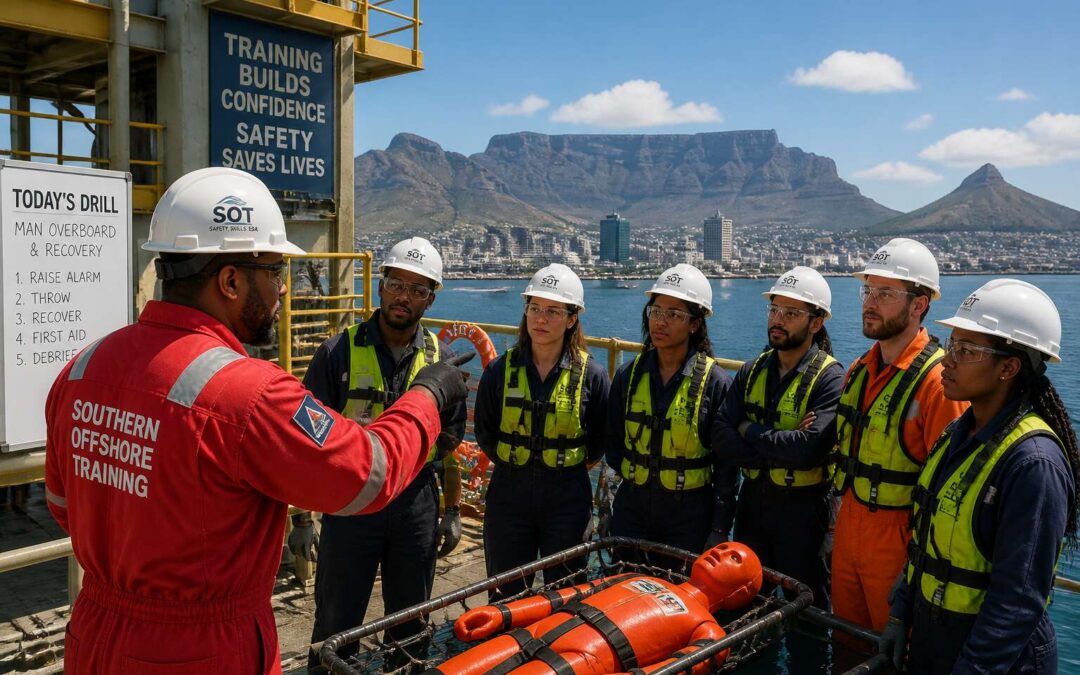
Cape Town is earning a reputation in energy education. The city’s maritime economy provides a practical backdrop for technical training, and I have seen that context change how students learn. When you enrol in oil and gas training courses in cape town, you are entering a space where classroom theory meets portside reality.
This matters because the industry demands more than textbook knowledge. It requires situational awareness, safety discipline, and the ability to respond under pressure. Several programmes focus on these exact competencies:
- Process safety and hazard identification
- Well control and drilling operations
- Environmental compliance for offshore projects
- Emergency response and evacuation procedures
Instructors draw on recent field experience. They talk about specific incidents, not abstract scenarios. That candour gives the training an urgency you rarely find elsewhere. Cape Town’s climate makes it a pleasant place to refine your skills, but the work itself remains serious.
Core Competencies Covered in Professional Energy Programs
The South African Oil and Gas Alliance projects over 300,000 new jobs by 2040, but the industry runs on competence, not numbers. Professional energy programs turn newcomers into capable operators. They teach the daily disciplines that keep workers safe and projects on schedule.
- Safety management systems that prevent critical failures.
- Reservoir engineering basics for efficient production.
- Environmental compliance under local legislation.
- Leadership for diverse teams under pressure.
These skills sit at the heart of oil and gas training courses in cape town. Students learn to interpret seismic data, manage well pressure, and handle regulatory audits. Practical simulation sharpens these abilities until they become instinct. This is the real value of structured energy education.
Tailored Training Paths for Different Career Stages
A fresh engineering graduate has different needs than a site supervisor who has spent a decade offshore. A project manager aiming for executive work expects something else again. The strongest oil and gas training courses in cape town acknowledge this reality. They build multiple pathways rather than forcing everyone through the same programme.
Entry level professionals typically start with safety induction, drilling fundamentals and equipment familiarisation. Mid career workers tend to pursue advanced process safety, maintenance planning or team leadership modules. Senior professionals look toward strategic operations, emergency response coordination and regulatory compliance at management level.
That segmentation matters. It reflects how people actually learn. When you already know the machinery, you need decision making skills, not another diagram. When you are new, you need concrete grounding before abstract theory. A competent provider asks about your experience first. That single conversation shapes the entire course selection. You spend your time on gaps, not repeats.
Evaluating Course Quality and Return on Investment
They say the gulf between a certificate and competence is vast, and in this industry, that gulf can be measured in barrels lost or lives endangered. Choosing from the available oil and gas training courses in cape town requires a discerning eye and a clear focus on the outcome.
You need to look past the glossy brochure and ask the hard questions about their safety record and curriculum relevance. The true test of quality lies in the fidelity of the simulation equipment and the instructors’ actual offshore or refinery experience. Scrutinize the syllabus ferociously.
A course that looks cheap upfront can bleed your budget dry later through operational mistakes. To assess value, you must verify:
– Accreditation by recognized industry bodies.
– Hands-on simulation hours versus theory.
– Instructor background in live operations.
– Pass rates for global certification exams.
When these boxes are ticked, the return on investment shifts. Days of unplanned downtime drop, safety incidents decline, and your crew’s competence becomes an auditable asset. That is where the equation gets interesting. Paying a premium for rigorous training is not a cost; it is the cheapest insurance your asset will ever receive.
Maximizing Your Training Experience in Cape Town
In an era where energy demands reshape markets, the skills you carry become your most dependable asset. Professionals across South Africa are discovering that oil and gas training courses in cape town offer a direct route to global competency and career resilience. The city has evolved into a legitimate hub for technical education, blending rigorous curriculum with the practical realities of the industry.
I have seen how focused instruction can change a person’s professional trajectory. These courses do more than deliver theory; they build operational judgment. A well-structured program will cover vital areas, which often include:
- Advanced safety management systems
- Subsea engineering fundamentals
- Production and process operations
- Environmental compliance standards
What makes the experience in Cape Town unique is the environment itself. The industrial energy creates a sense of purpose that is hard to replicate elsewhere. After spending weeks in this dynamic setting, you return home with sharper instincts and a clearer vision for your future. The city leaves its mark on every learner who walks through its lecture halls. It is memorable, challenging, and ultimately rewarding.