
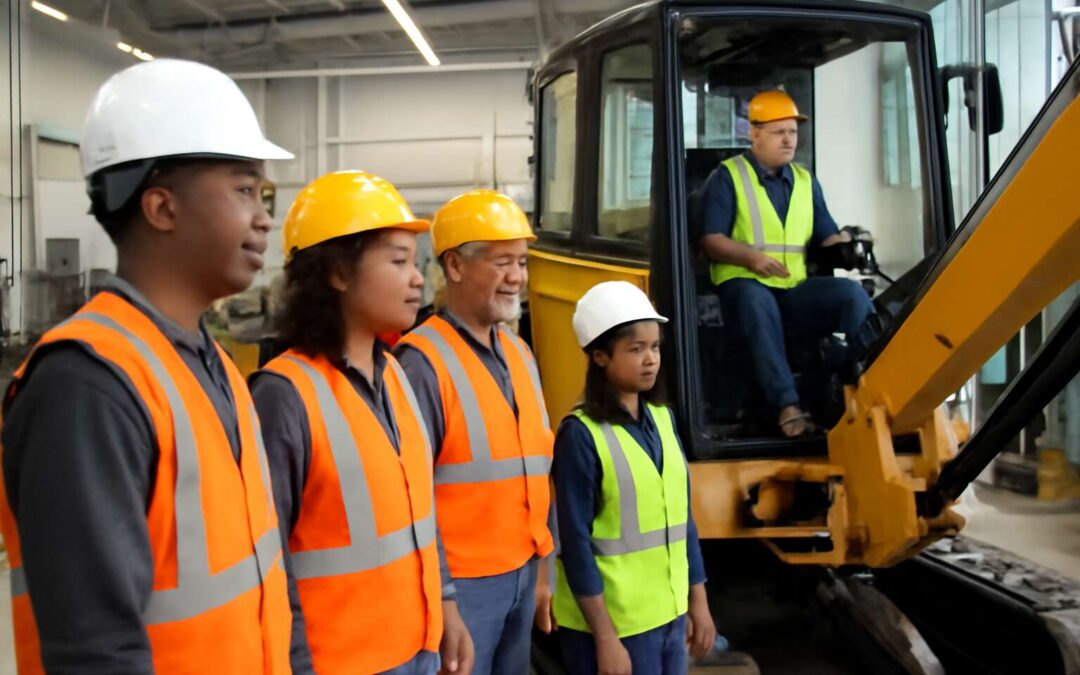
Overview of Caterpillar Training Courses
What are Caterpillar Training Courses?
Across South Africa, facilities that invest in operator training cut downtime by as much as 25% and lift morale on the yard. caterpillar training courses are crafted to turn curious beginners into steady hands, aligning local grit with global best practices.
These programs are structured to equip operators, technicians, and safety teams with hands-on machine operation, preventive maintenance basics, and safety protocols—tailored to the real challenges of South African sites.
- Hands-on operation and safety training
- Diagnostics, fault finding, and preventive maintenance
- On-site problem solving and efficiency strategies
Key Skills Taught in Caterpillar Training
Across South Africa, facilities that invest in operator training report downtime reductions of up to 25%. The aim is to turn curious beginners into steady hands, translating local grit into globally recognised best practices.
Key skills taught include:
- Reading and interpreting machine dashboards and control logic
- On-site troubleshooting with real-world constraints
- Safe operation rhythms and hazard awareness
- Structured inspection routines and maintenance planning to extend life of components
These caterpillar training courses emphasise practical problem solving, straightforward diagnostics under field conditions, and a disciplined approach to maintenance—delivered with local context in mind!
Who Should Enroll in Caterpillar Courses
Across South Africa’s demanding sites, caterpillar training courses reveal a stubborn truth: mastery begins with reading a machine’s heartbeat. A well-taught operator can cut downtime and errors, transforming local grit into reliability that travels beyond borders. The aim is not mere competence but a disciplined instinct—an ability to act decisively when dashboards blink and the unexpected arrives.
Who should enroll? Operators starting out, seasoned technicians chasing certification, site supervisors, and fleet managers seeking consistency.
- New operators building a solid foundation
- Experienced technicians pursuing formal credentials
- Supervisors coordinating safe, efficient teams
- Maintenance staff aiming for longevity of components
Formats vary—on-site sessions, classroom theory, simulator labs, and blended learning—delivering flexibility for busy schedules. Graduates earn globally recognised credentials and join a network upholding the Caterpillar standard across industries.
Course Formats and Duration of Caterpillar Training
Downtime costs on South Africa’s heavy sites pile up quickly, but caterpillar training courses give operators a pulse on the machine—teaching them to read every heartbeat and act with confidence when dashboards flash.
This overview explains what you encounter: practical fundamentals, safety consciousness, and a mindset built for reliability, not excuses. It’s about translating classroom theory into on-site instincts that keep rigs moving and teams aligned.
- On-site sessions tailored to your fleet
- Classroom theory with interactive discussions
- Simulator labs for risk-free practice
- Blended learning combining both approaches
Duration: Core modules typically run 3-5 days; more comprehensive credentials unfold over 2-4 weeks, with hands-on practice and rigorous assessments to ensure readiness.
Certification and Accreditation for Caterpillar Training
Accredited credentials keep heavy machines turning. Certification is the difference between a halt and momentum on South African sites. Official credentials come from caterpillar training courses, delivered through Caterpillar or authorised dealers and backed by rigorous assessments.
National recognition comes via alignment with SAQA and the National Qualifications Framework; accreditation typically rests with the relevant SETA and industry bodies to guarantee consistent outcomes.
- Official Caterpillar credentials through authorised dealers
- Alignment with SAQA/NQF standards
- Independent accreditation and periodic audits
These certifications translate into on-site reliability, boosting operator confidence and keeping rigs moving on South Africa’s fleets.
Course Topics and Curriculum
Core Mechanical and Electrical Foundations
Across South Africa, caterpillar training courses prepare technicians to service heavy machinery with confidence! The Course Topics and Curriculum Core Mechanical and Electrical Foundations focus on core safety practices, hydraulic theory, engine basics, and electrical systems. This structure translates field know-how into formal competence and helps maintenance teams meet local safety standards.
- Hydraulics, drive systems, and transmission concepts
- Engine fundamentals, cooling, lubrication
- Electrical fundamentals, sensors, and control circuits
- Diagnostics, fault-finding, and data interpretation
- Safety, regulatory compliance, and workplace practices
Hands-on labs and live simulations reinforce the theory, helping technicians translate classroom learning into on-site reliability. The curriculum is portable across mining, construction, and transport sectors, reflecting South Africa’s diverse equipment landscape and a demand for dependable maintenance.
Hydraulics and Pneumatics for Caterpillar Equipment
Across South Africa’s demanding job sites, hydraulics keep heavy machines moving with precision. In our caterpillar training courses, technicians explore hydraulic theory in the context of real equipment—booms, buckets, and tracks—learning to read pressure, trace flow, and detect leaks before they become costly delays. The result is steadier hands and wiser decisions on the shop floor and in the field.
Students gain practical insight into how hydraulic and pneumatic systems translate into on-site performance. They study pumps, motors, actuators, valves, and the control logic that governs movement, then apply what they learn in live simulations that mirror mining, construction, and transport environments.
- Hydraulic circuit theory and pressure control
- Pumps, motors, actuators, and leakage prevention
- Valves, sensors, and control logic
With hands-on labs, the theory becomes field-ready competence, helping teams keep fleets moving under South Africa’s skies. This module threads through caterpillar training courses, weaving reliability into daily on-site work.
Diagnostics and Troubleshooting Techniques
On South Africa’s busiest sites, a single hydraulic fault can stall progress for hours, turning momentum into stillness. In our caterpillar training courses, technicians translate theory into field confidence, mapping every lesson to the machines that move our landscapes—booms, buckets, and tracks—without getting lost in jargon.
Course Topics and Curriculum Diagnostics and Troubleshooting Techniques unfold through hands-on labs, where theory meets field practice. The rhythm includes reading pressures, tracing flows, and isolating faults in realistic simulations.
- Pressure profiling and leak detection in hydraulic circuits
- Fault-code interpretation and electrical control logic
- On-site fault isolation and stepwise validation
These programs cultivate poised technicians who anticipate issues before they slow fleets, turning downtime into data-driven decisions and keeping South Africa’s machines humming under wide skies.
Safety, Compliance, and Regulations
On South Africa’s busiest sites, a single safety misstep can derail progress for hours. In caterpillar training courses, safety, compliance, and regulatory literacy are braided into every module, turning abstract theory into field-ready confidence.
The curriculum treats safety as a living practice, not a checkbox. It foregrounds standardized procedures and regulatory expectations so technicians translate knowledge into careful, compliant action.
- SA Occupational Health and Safety Act (OHSA) compliance
- ISO 45001 safety management system alignment
- Machine-specific safety standards and lockout/tagout practices
- Incident reporting, investigation, and root-cause analysis protocols
Graduates of caterpillar training courses emerge ready to uphold safe operation, minimize downtime, and keep South Africa’s fleets humming under wide skies.
Advanced Control Systems and Telemetry
On South Africa’s busiest sites, a single telemetry ping can turn a day of idle hours into a chorus of productive movement. In caterpillar training courses, the Advanced Control Systems and Telemetry module carves that chorus into actionable practice, translating streams of data into smart decisions. Expect a curriculum that blends modern automation with rugged field reality, guiding technicians to harness feedback loops rather than chase symptoms.
- Real-time control systems and sensor fusion
- Telemetry architectures, data pipelines, and cloud integration
- Remote diagnostics, fault isolation, and predictive maintenance
- Cybersecurity, data integrity, and access controls on fleet networks
Graduates wield the language of telemetry with confidence, turning dashboards into downtime savings and terrain into throughput—without losing the human touch.
Delivery Methods and Formats
Online and Hybrid Learning Options
Flexibility is the new steel in training, and caterpillar training courses bend to the rhythm of work—shifts, site access, and client commitments all accommodated without compromising outcomes. This approach treats learning as an experience, not a checkbox, inviting professionals to engage deeply wherever they operate.
Delivery methods span online and hybrid formats, blending synchronous sessions with self-paced modules. In practice, courses move beyond lectures to practical, simulated tasks that mirror field challenges. Here are core formats you might encounter:
- Live instructor-led online sessions
- Self-paced e-learning modules
- Virtual labs and simulations
- On-site blended workshops
In South Africa, providers tailor schedules to local needs, pairing digital theory with supervised on-site application. Mobile-friendly platforms and concise modules keep progress visible and relevant to real-world machinery environments.
In-Person Training for Hands-on Practice
In-person hands-on training is where theory meets grit. Industry data show hands-on sessions reduce downtime by up to 40%, because technicians practice with real controls and feedback loops. For caterpillar training courses, this format means learners move beyond slides to real-world familiarity—shifting gears, calibrating hydraulic systems, diagnosing live faults on-site. It’s learning that sticks!
In South Africa, providers tailor schedules to local sites, pairing on-site practicum with immediate feedback from seasoned mentors. This approach suits caterpillar training courses that blend theory with hands-on work, ensuring relevance to local conditions.
- On-site practical sessions with actual machinery
- Supervisor-guided troubleshooting drills
- Post-session debriefs with performance metrics
This approach keeps progress tangible, ensuring skills stay relevant to real machinery environments.
Hands-on Labs and Simulators for Real-world Scenarios
Delivery methods that fuse practice with precision turn caterpillar training courses into real-world preparation. In hands-on labs and lifelike simulators, theory meets grit as technicians navigate gear trains and feedback loops. Industry data show hands-on sessions can reduce downtime by up to 40%, proving that learning sticks when pressed by real-world conditions.
For real-world impact in South Africa, these formats translate into on-site labs and portable simulators that travel with the team.
- High-fidelity hydraulic and control-system simulators
- On-site practical labs with actual Caterpillar components
- Scenario-driven drills and supervisor feedback
This approach keeps the experience practical and scalable, aligning with local conditions and safety standards to ensure skills stay sharp for the fleet and the field.
Self-paced Modules and Microlearning
Self-paced modules unlock caterpillar training courses in bite-sized, on-demand chunks that respect a busy technician’s calendar—it’s the quiet revolution in how technicians learn. Learners move through concise videos, quick assessments, and hands-on prompts when and where they can—on-site, in the workshop, or between site visits—without waiting for a fixed class. Microlearning’s tiny, repeatable doses boost retention and keep pace with evolving machinery and controls.
Key advantages include flexibility, portability, and measurable progress. The format suits South Africa’s spread-out teams, offering trackable milestones that shine on performance dashboards.
- On-demand video tutorials
- Micro-assessments and spaced repetition
- Mobile-friendly access with offline options
In this delivery method, these programs become a practical companion for ongoing skill reinforcement rather than a one-off event.
Assessment, Practical Projects, and Certification Preparation
In bite-sized form, learning sticks with surprising speed. Retention improves by up to 30% when technicians engage self-paced content, and caterpillar training courses respect a busy schedule while sharpening judgment in the workshop.
Delivery Methods and Formats Assessment are concise, spaced, and mobile-friendly, designed for on-site days, workshop timing, or between site visits. Quick checks translate into real progress, with data lighting up performance dashboards that map a learner’s trajectory.
- Real-world task simulations aligned to job roles
- Frequent micro-assessments to reinforce memory
- Progress tracking with actionable feedback
Certification Preparation ties practice to credential standards, guiding learners through mock exams, review sessions, and strategic study plans. The aim is a confident, verifiable readiness that translates into professional credentials.
Career Benefits and ROI
Industry Demand, Certification Credibility, and Career Pathways
Uptime is currency in South Africa’s heavy industries, and caterpillar training courses turn downtime into dollars—think 15–25% fewer unplanned stoppers. Firms report longer intervals between repairs and faster fault resolution after completing these programs, a tangible ROI. As fleets in mining, construction, and farming modernize, demand for certified technicians continues to grow. A credible certification amplifies hiring confidence and earning potential!
- Higher uptime and lower maintenance costs
- Faster career progression and increased earning potential
- Recognized, industry-aligned certification
Career pathways open from service technician to field engineer and fleet manager, with opportunities across mines, construction sites, and service networks. The credentialed skill set anchors long-term resilience as automation reshapes the industry.
Salary Upgrades and Advancement Opportunities
Uptime is currency in South Africa’s heavy industries, and firms report 15–25% fewer unplanned stoppers after completing caterpillar training courses. That tangible ROI materializes as shorter downtime, faster fault resolution, and steadier production. As one mine supervisor noted, “When the machines sing, the ledger sings with them.”
With these credentials, salary upgrades aren’t a guess—they’re a trajectory. Certified technicians unlock clearer promotion paths and access to higher-earning roles such as field engineering support and operations leadership, with pay bands tied to uptime and diagnostic reliability in South Africa’s mining and construction sectors. In South Africa, certified technicians who complete these programs often command premium pay and faster progression.
- Higher pay and accelerated promotions
- Expanded roles and leadership opportunities
- Stronger job security in a tightening market
Across mines, construction sites, and service networks, caterpillar training courses anchor a future-proof skill set as automation reshapes the industry.
Employer Benefits and Return on Investment
Career benefits from caterpillar training courses are real, not theoretical wallpaper. In South Africa’s heavy industries, certified technicians translate skill into uptime, which in turn spawns faster fault resolution and shorter downtime. The trajectory isn’t vague—it leads to salary upgrades and clearer promotion paths, because reliability is the new currency on the mine floor.
- Higher earning potential tied to uptime and diagnostic reliability
- Expanded roles with leadership opportunities
- Stronger job security in a tightening market
Employer benefits and ROI flow from better fleet availability, lower maintenance costs, and quicker fault containment. Caterpillar training courses empower teams to cut unplanned stoppages and deliver steadier production, which translates into more predictable project timelines and improved client confidence.
Real-world Testimonials and Case Studies
In South Africa’s heavy industries, uptime is currency, and professionals who master diagnostics become the difference between outage and uptime. caterpillar training courses sharpen that edge, translating classroom insight into field reliability. Higher earning potential follows from predictable performance, because employers reward technicians who shorten fault resolution and steady production cycles.
Real-world testimonials anchor the promise of payoffs. Here is what frontline teams report:
- “Downtime dropped 22% within six months; a promotion followed.”
- “Diagnostics now take minutes, not hours; client confidence rose and leadership doors opened.”
The ROI is tangible—lower maintenance costs, tighter schedule adherence, and a resilient workforce ready for telemetry and control-system advances.
Finding the Right Training Provider
Accreditation, Partnerships, and Industry Recognition
Choosing the right training provider for caterpillar training courses in South Africa comes down to three things: credible accreditation, meaningful partnerships, and genuine industry recognition. Look for SAQA or SETA-aligned credentials, clear pathways to apprenticeship credits, and a track record that proves alumni are keeping machines turning and downtime low. A good program feels like a well-tuned engine: reliable, transparent, and built for real jobs, not just glossy brochures.
- Recognised accreditation with SAQA or SETA and clear expiry timelines.
- Active partnerships with Caterpillar dealers for hands-on access and real-world projects.
- Evidence of industry recognition through endorsements, operator cards, and strong alumni outcomes.
Finally, evaluate how the provider communicates partnerships and recognition—transparency sells. When a program can point to active collaborations, documented success stories, and ongoing dialogue with industry bodies, it’s a sign the caterpillar training courses you’re considering will translate into productive, uptime-friendly operators on the floor.
Course Comparisons, Syllabi, and Learning Outcomes
Finding the right caterpillar training courses begins with a discerning eye for course comparisons, syllabi, and learning outcomes. A well-structured syllabus reads like a map: milestones, practical projects, and a trajectory from fundamentals to applied mastery that fits South Africa’s industrial tempo.
Course comparisons should reveal the shape of the program: how modules unfold, the emphasis on theory versus hands-on practice, and the path to credentialing. A transparent provider will lay out expected competencies and measurable outcomes, visible from the first module.
- Clear learning outcomes and measurable competencies
- Module sequencing that builds from fundamentals to advanced tasks
- Hands-on hours, simulators, and real-world projects
- Assessment methods and alignment with certification pathways
A well-chosen provider lets the arc from classroom to floor feel inevitable—an engine that performs, quietly loyal to the task at hand.
Pricing, Financing, and Scholarships
In South Africa’s sun-warmed workshops, operators report a 22% drop in downtime after adopting structured caterpillar training courses, turning idle hours into productive shifts and building dependable, hands-on teams.
Pricing transparency matters as much as the syllabus. Look for providers who spell out what a course covers, what’s included, and any hidden fees. Flexible financing and employer sponsorship can turn an ambitious upgrade into a practical investment.
- Clear price breakdowns for tuition, materials, and certification
- Flexible payment options, including instalments
- Scholarships, bursaries, or government grants for qualifying learners
- Financing partnerships with funds or equipment suppliers
Regional relevance matters too; choose a provider with South Africa–specific case studies so theory translates to on-site gains. With the right funding path, caterpillar training courses become a catalyst for uptime and safety.
Scheduling, Accessibility, and Flexible Learning Windows
In South Africa, uptime has a heartbeat. A recent survey shows a 20% drop in downtime when caterpillar training courses are scheduled to fit real rosters, not the other way around. The right provider turns the timetable into a patient ally, guiding operators through dusk-lit workshops toward crisp, safe performance.
Scheduling and accessibility are the gatekeepers of true mastery. Learning windows that align with shift patterns, transport realities, and language needs emerge as essential.
- Flexible class times that respect rosters and overtime plans
- On-site, off-site, or hybrid access for commuting constraints
- Modular microlearning that fits busy weeks without sacrificing depth
With these elements, training programs become a lantern, illuminating reliability and safety across South Africa’s rugged workplaces.
Support, Mentorship, and Alumni Networks
Mentorship is the invisible engine powering every move on a Caterpillar machine. In the South African context, robust mentorship and alumni networks turn isolated lessons into living competence. caterpillar training courses that embed mentors guiding operators through dusk-lit yards become catalysts for safe, steady performance.
- Structured mentorship pairing with hands-on operators
- Active alumni networks across regions for peer problem-solving
- Ongoing coaching and refresher sessions post-course
- Accessible mentors via on-site visits or virtual clinics
Choose training that invests in people—the true engine behind safe operation and lasting proficiency.